The University of Wisconsin - Madison, my alma mater, claims to be very diverse. Supposedly, campus is filled with students coming from all unique walks of life. We represent all 50 states and over 130 different countries... impressive!
So, why is everyone I know white, middle-class and either from Wisconsin or Minnesota?
Ok, that's not completely true. I have some friends from LA and one from St. Louis. Occasionally, I meet someone from another country and I get really excited.
In all honesty, Madison is just not the admirably diverse campus that they claim to be.
John Cabot is much more diverse. Not just in having students from Albania, Istanbul, and Italy, but also by having students from all across America. Unfortunately, as an only moderately attractive, American male, it has been difficult for me to meet a lot of international students. It has been fairly easy, however, to finally meet people coming from outside the corn-maze prison of the mid-west. This has led to some, surprisingly enlightening, cultural experiences.
For example, a couple weeks ago, I went out with my two roommates, Joe, from Chicago suburbia and Anthony, from the big-city Bronx, as well as our Wesetern-Pennsylvanian friend turned New Jersian, Mickey. The dinner boiled down to two sides of the table: Joe and I representing the naive, nice-hearted mid-westerners and Anthony and Mickey representing the hard-nosed, do it right the first time east-coasters.
Dinner was great... except for the wine. I guess the 3 meatballs for 4 euro each was a little disappointing for Anthony. (Moral: Don't go to restaurants north of the Tiber) Seriously, the wine was terrible. It tasted like day-old water. Joe and I decided not to say anything. We should be appreciative. Why say anything if you have nothing good to say? Be nice and polite. After all, we are guests at their establishment.
Mickey and Anthony weren't going to let them off the hook though. Sure enough:
Anthony, "Scusi!"
Waiter, "Sì?"
Anthony, "a.. Il vino..."
Waiter, "è buono?"
Anthony, "No, non buono... acqua."
Waiter, "acqua?"
Anthony, "Sì, tastes like acqua."
Waiter walks away. The look on my face was one of terrible discomfort. Oh man, I hate confrontation for no good reason. Why? Just drink the wine! Leave me out of it. Who cares? Great, now he hates us.
Then, we entered into a discussion. Ok, more like an argument, but a friendly one. Joe and I were set on not doing anything, not saying anything and just paying the bill and getting out of there. Too late now I guess. We talked about who had the better course of action. We talked about our reasonings behind our opinions. It all seemed to rest on the simple fact that Joe and I were raised in the mid-west and Anthony and Mickey were raised on the east coast.
Then, the waiter comes back with a bottle of wine, "on the house." All right, fine. They won this one. But, still.
Then, the waiter comes back again. He takes Mickey into the kitchen and when she comes back she says, "well, we all just got a free dessert!" Ok, I'll admit it. They got me on this one. My little naive, no confrontation, no complaints, if you've got nothing good to say don't say it attitude just got seriously smacked up.
To the victors, the glory. East coast attitude gets you free wine and free dessert. Mid west attitude gets you nowhere.
Then again, maybe its the Italian attitude. Italians are all about having a good time and showing other people a good time. If you show any signs of not having a good time they will do what they can to change that. Their first concern is enjoying life. Their argument might run: Hey, you are living the only life you've got so you had better be enjoying it. This theme has shown up time and time again here.
As awesome as it is, the Italian attitude can be very inefficient when it comes time to get things done.
Ultimately, it was a learning experience. I'm learning about different cultures in Italy, in the world, and even in my home country. I'm learning where these people come from and why they think what they think and do what they do. I'm learning that sometimes you have to be stern and rude to get what you want, sometimes, you should just simply enjoy life, and, sometimes, you have to get your hands dirty and do some work. I only hope that they (or you) are learning from me as well.
Hopefully, there is something to be learned from the mid-western mind-set.
The interesting thing is that it's pretty easy to recognize what you've learned from other people, but it is quite difficult to see what others have learned from you.
Thursday, February 23, 2012
Wednesday, February 22, 2012
Friday Impossible: Day Trip to Florence
John Cabot University had the brilliant idea of cramming a visit to the art-capitol of the world into one measly afternoon. Needless to say, I was left unsatisfied.
The day started at 5:30 in the morning. I logged on to Facebook to fulfill my morning routine and chatted with a surprisingly sober-seeming Eric Sweirczek. Especially since he had the awesome news that he will be traveling to Paris this summer! Oui, oui! Congratulations bud.
I was traveling with Joe who woke up just in time, still slightly inebriated from last evening. Joe and I had about a combined 6 hours of sleep that night. We got to the bus, sat down, and went right back to sleep.
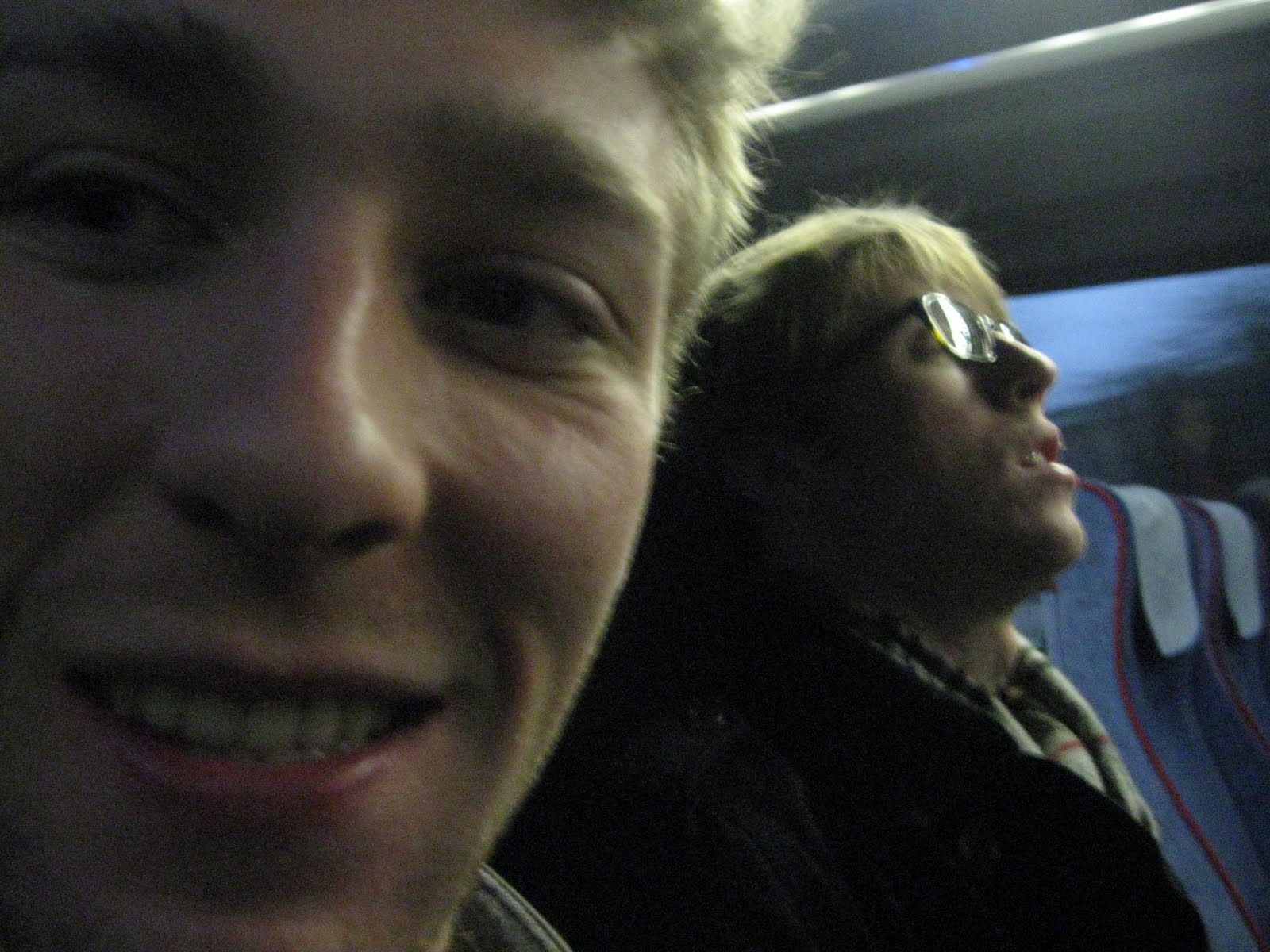
I woke up halfway to Florence on the open highway and received a beautiful sunrise view of Tuscany through my window.

I got a good start on the book I borrowed from Adam, Hemmingway's The Sun Also Rises, and we arrived in Florence shortly thereafter. It was cloudy and looked like it might rain.
Getting off the bus and meeting our tour guide made me feel much more like a tour group than I would have preferred. However, the guide was really nice, funny, and had some good insight about our visits. We first visited the burial site of Michelangelo and Galileo, the Basilica of Santa Croce.

They weren't the only ones buried here. Many high-standing members of the Catholic Church, writers, poets, artists and architects were as well. Many devout religious men would be buried in the floor in strategic locations that required visitors to walk over them in order to conduct their worships. The whole layout of graves was sporadic and eerie.

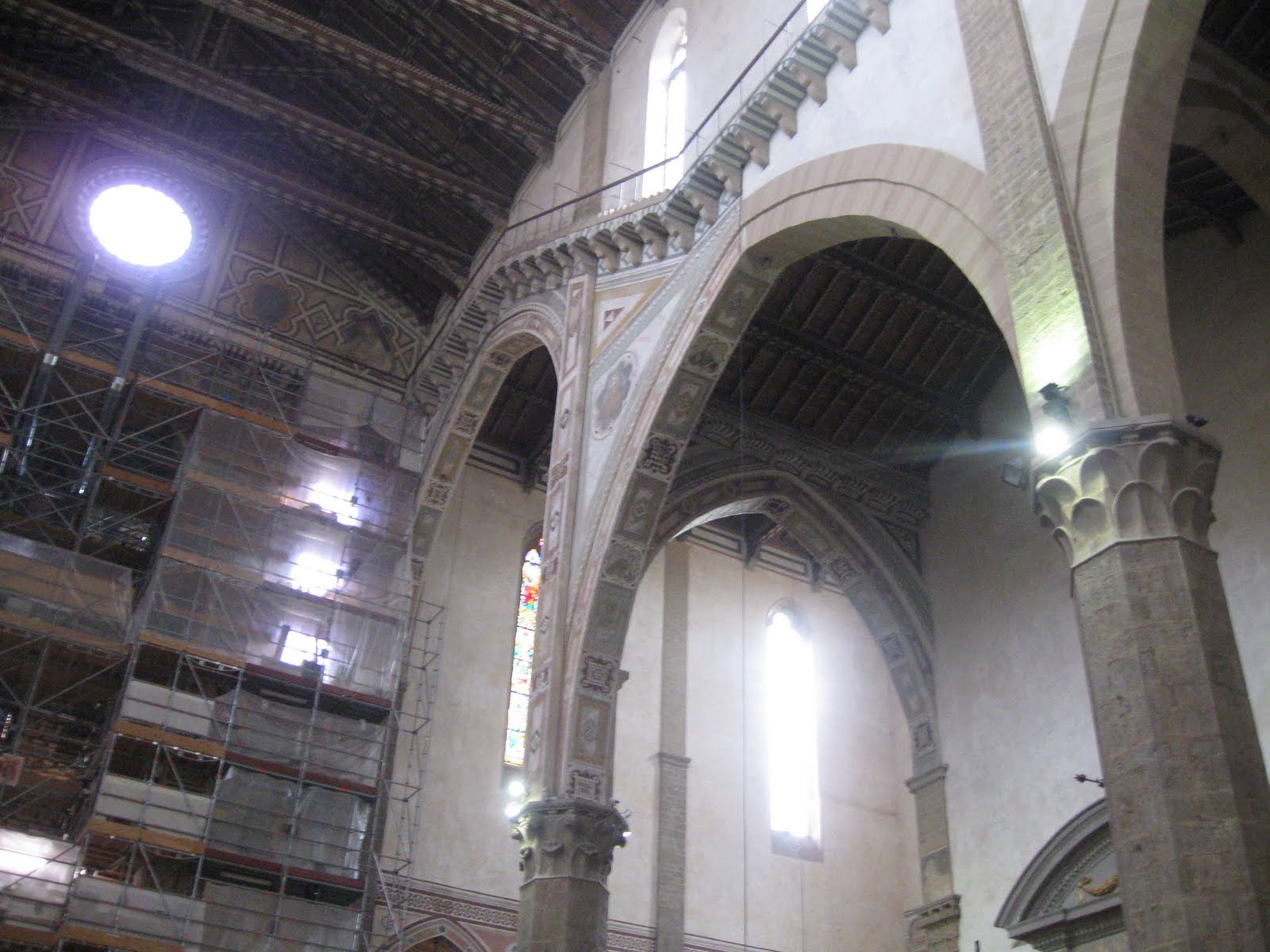
They were currently attempting to restore the basilica to its former, 15th century state by conducting work on the frescoes. As it is seen today, the walls are white and the brick is exposed. When it was constructed in 1442, all of the walls and brick arches would have been decorated in colorful frescoes. This next picture shows a restoration juxtaposed with the current state of preservation. The entire basilica would have had a completely different atmosphere.
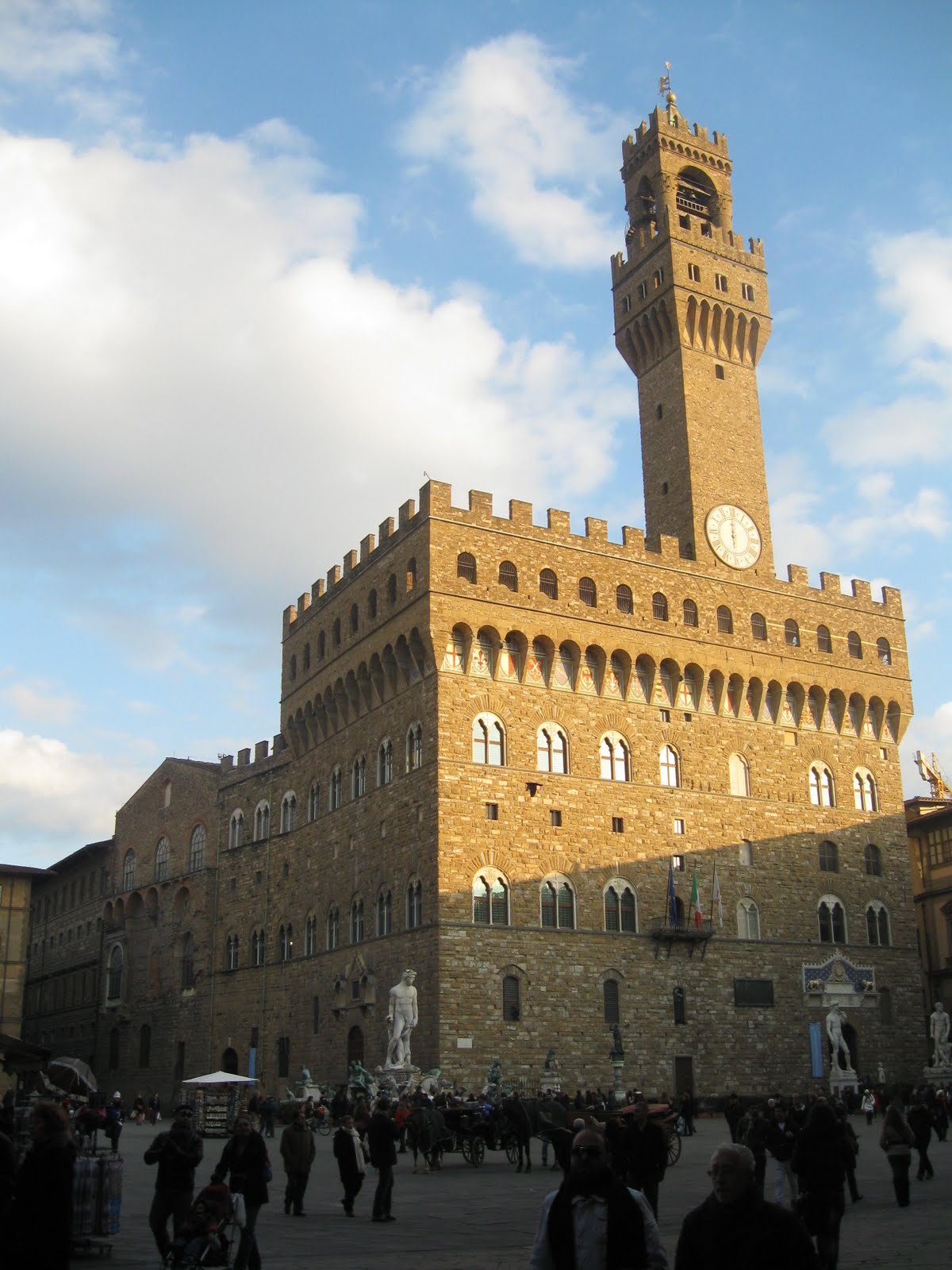
Next on the tour was the Palazzo Vecchio. Recently turned into a museum, it was the home of the famous Machiavelli family and was the seat of the Florentine government. The Machiavelli family was the most powerful in Florence and they were also very interested in art. They created a massive collection of artwork with the intent of showing it off to the important people at the time. The Palazzo was the original location of the David and many other brilliant statues used to symbolize the strength and glory of Florence.
Nearby is the Musei Uffizi. This office building constructed by the Machiavelli later became the home of their art collection, making it one of Europe's first public museums.
We were unable to visit either museum, due to time...
Our lunch/dinner was pretty good. Although, most of my peers would have disagreed. I think their over-expectation for spectacular food, everywhere they go, tends to allow for disappointment in things which are still really great. I try to avoid that mentality.
I have come to adopt a different mentality: It's all about living and enjoying life, not about expecting life to be a certain way. This mentality, I believe, leads to the best possible enjoyment of Italy.
After lunch was free-time. Yay, kindergarten! Joe and I decided to climb to the top of the Duomo.
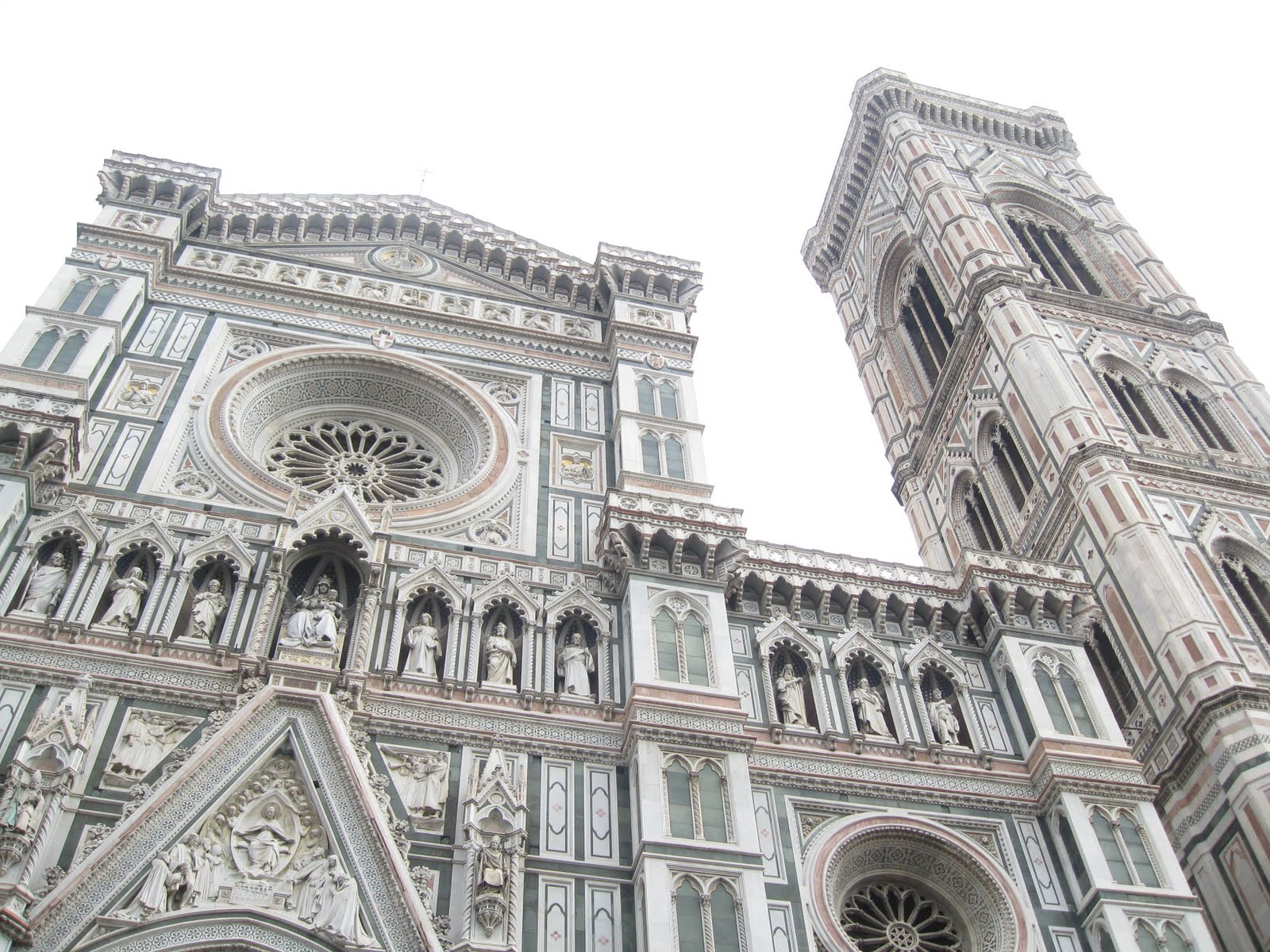
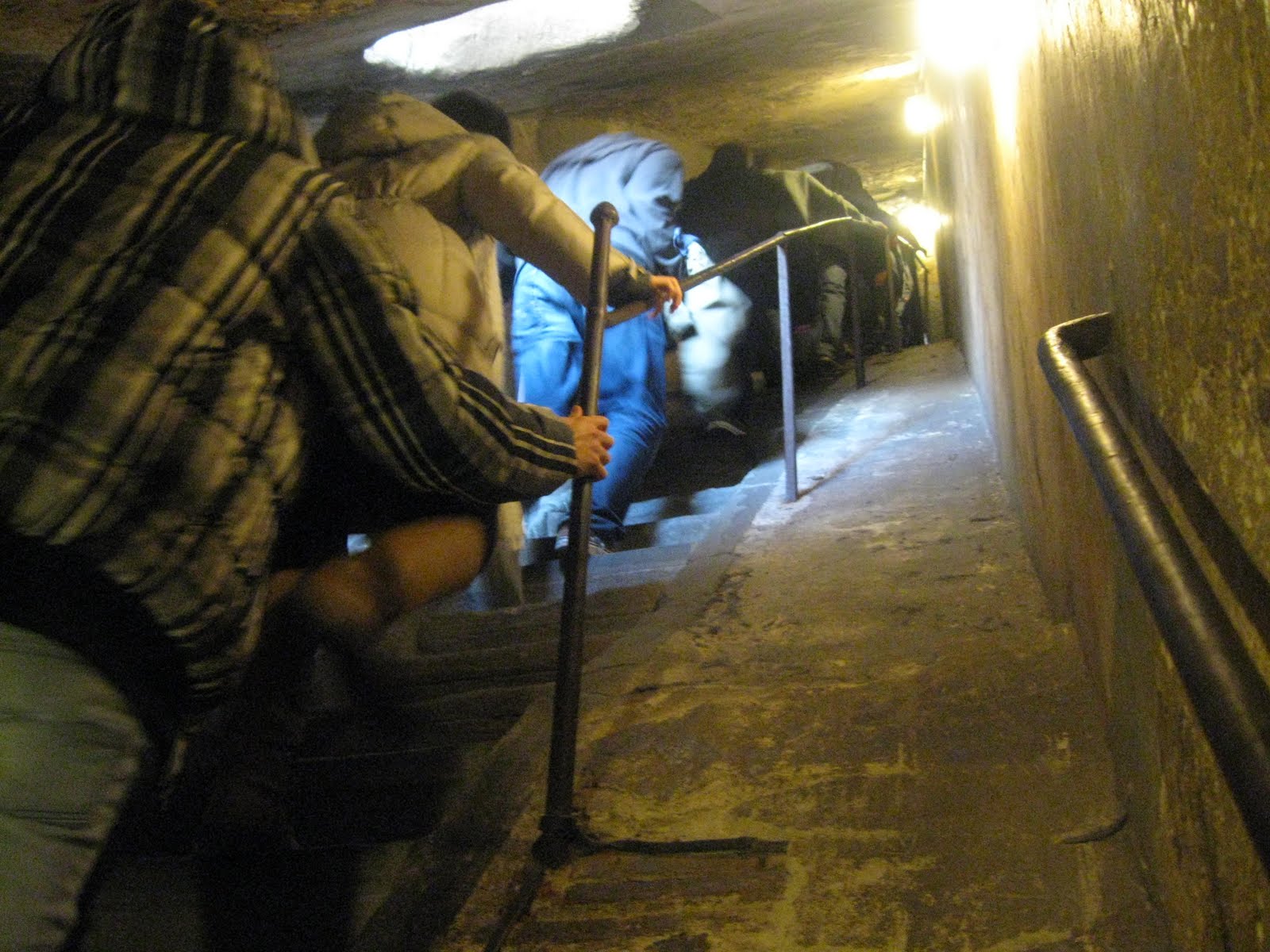
Finally, we got to the top. Wow!

360 degree view of Florence from the highest point in the city. Gorgeous!
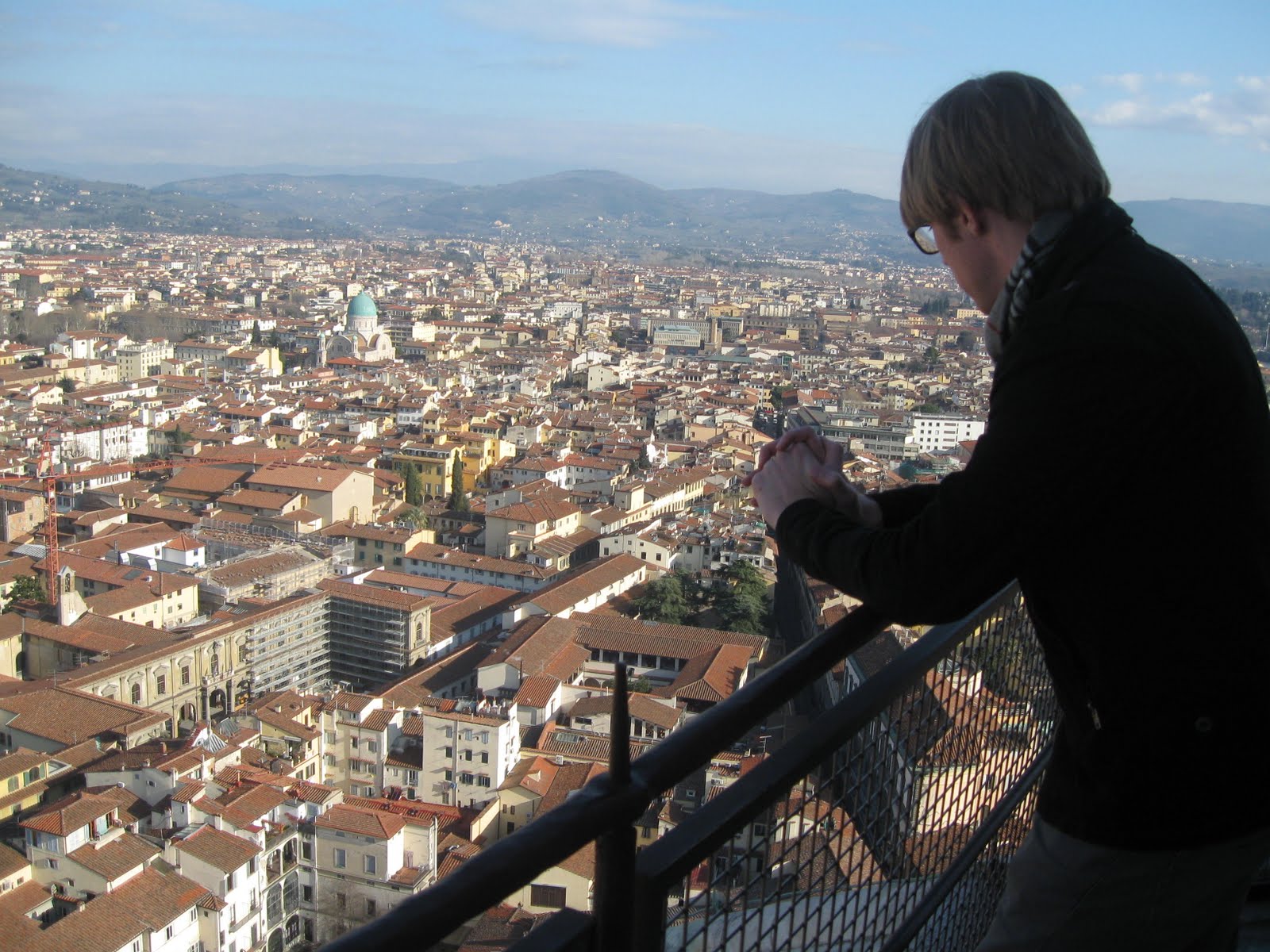
One thing that was slightly disappointing was the graffiti. Italy (and most of Europe, I think) is covered with graffiti. Although as strange as it is, it's really part of the culture. Some of it is very creative, and for the most part it doesn't point to any sort of danger, poverty, gang activity or other negative associations generally made with it in the States. In fact, the graffiti can be used academically to historically document social concerns and trends at particular time periods.

The grafiti never bothered me until I saw it up here. When
it defaces a concrete wall, I'm fine, but when it defaces a marble monument, it
bothers me. It just seems unnecessary.
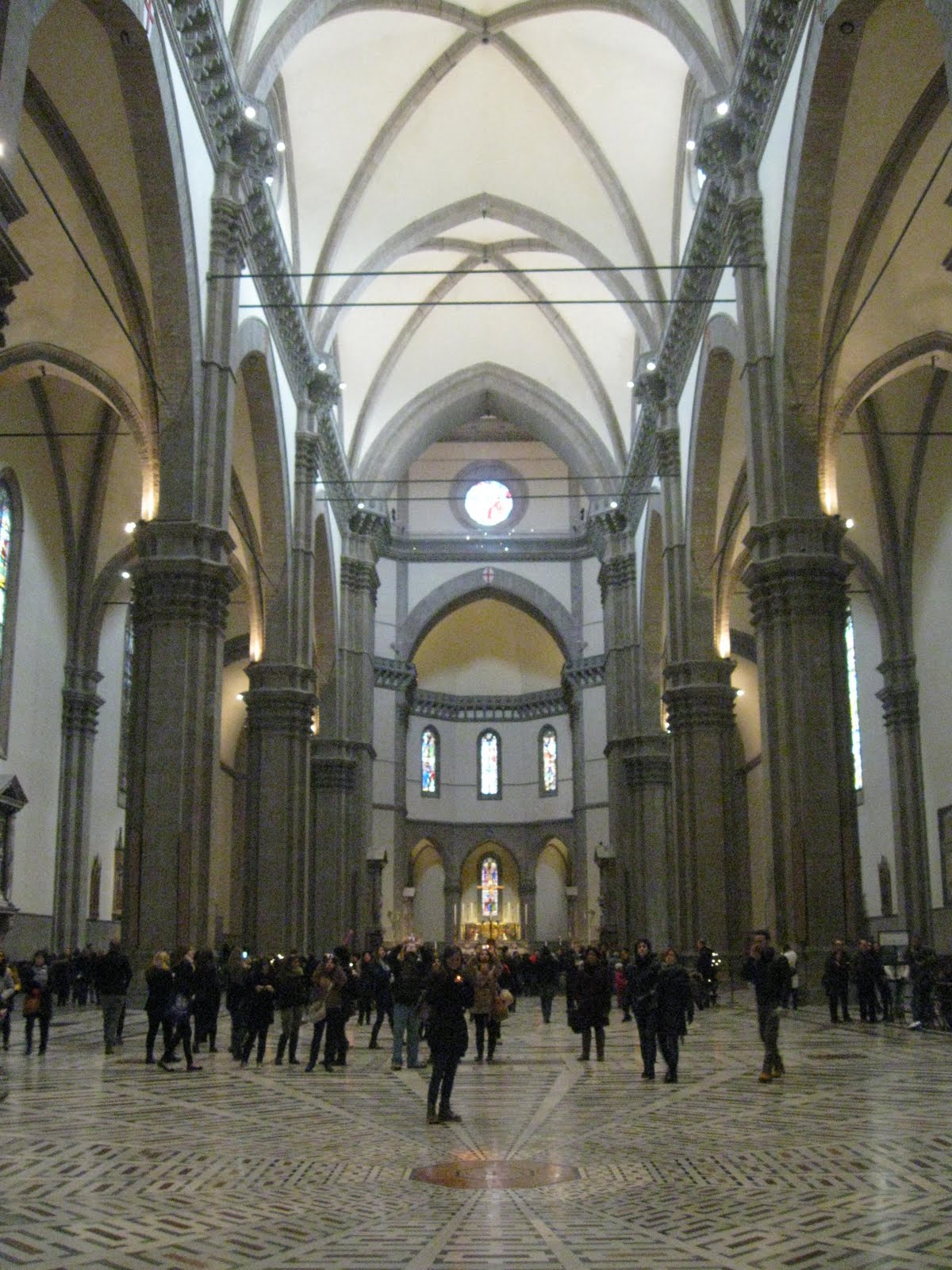
We walked down and stopped inside the Duomo which we were
just on top of. Sheer height and size! Simply sublime! In fact, this particular Duomo was
the inspiration behind the construction of St. Peters Basilica.
Of course, we had to see the David, and we had just enough
time to do it. The David is hands-down the most impressive statue I have ever
seen. One art historian once said that we could throw out all Greek statues and
replace it with the David. Once you see it, it's hard to argue against that. Pure genius.

(Credit: Wikipedia)
Seeing this statue raises many questions. Most of them
worth-while and academic, others simply for entertainment.
Here is a good entertianable example. Would you rather be Michelangelo or the model for the David?
Would you rather have your supreme, artistic ability be immortalized in stone for all
to see or have your perfect body immortalized in stone for all to see? Great
conversation starter.
In the waning hours of the day, exhaustion started to set
in. I had only a couple more stops in mind. The first, of course, was to buy a bottle
of Tuscan wine. "Buona sera!
Qual vino rosso è più buono per dieci euro? ... Ciao e grazie!" Who
knows if that was correct? But, he picked out one for 8.50 and it was the best
wine I've had in Italy so far.
Lastly, the Ponte Vecchio, meaning literally the old bridge. Indeed, it
is an old bridge. The only one not knocked down by the Nazis. Supposedly,
Hitler really liked it.
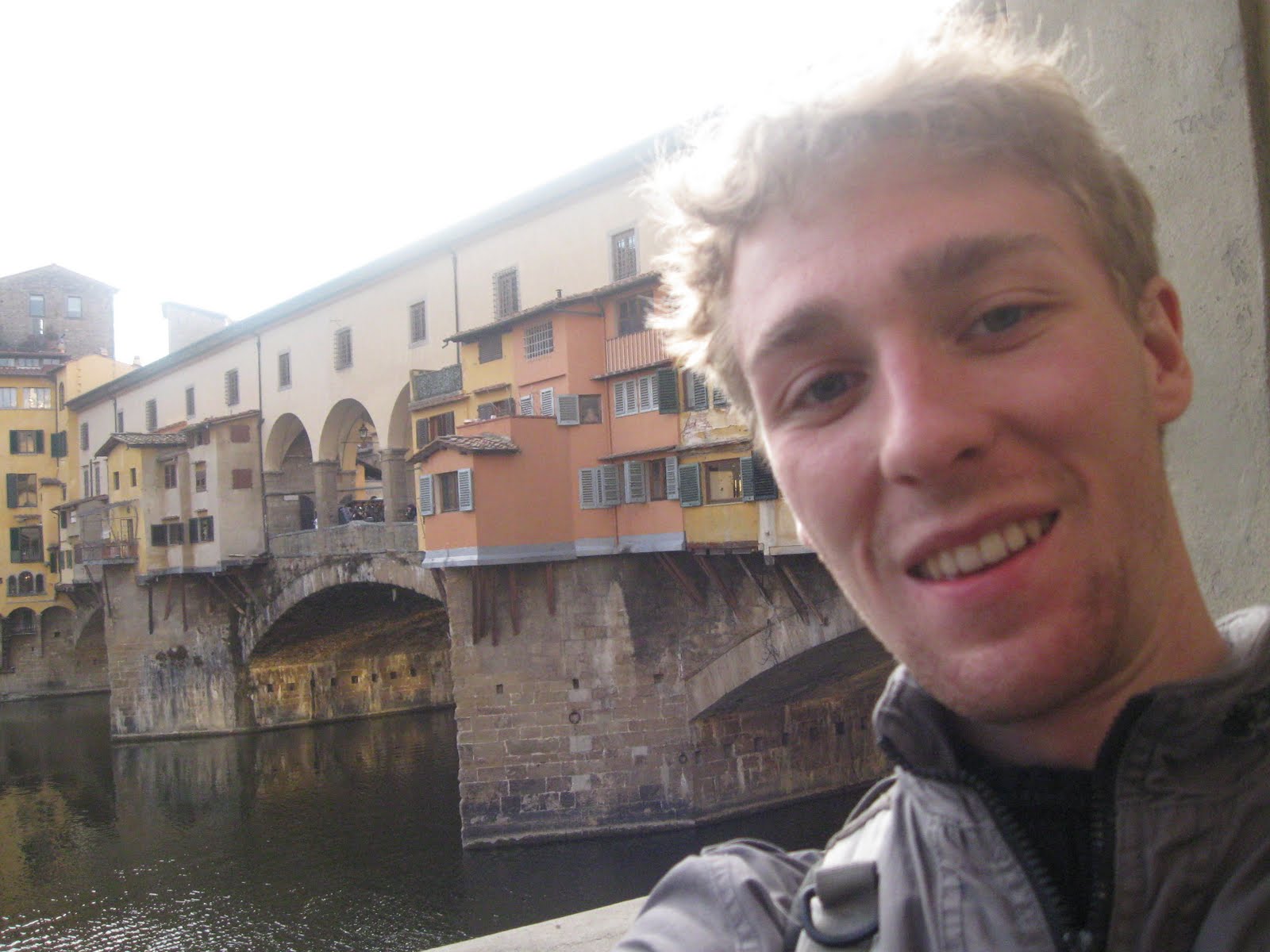
The bridge has a hallway on top which was used by the
Machiavelli family so that they could commute from their mansion to their
palace without having to mingle with the common folk. However, the shops on the
bridge (yes, on the bridge), at the time, were mostly butcher shops
and leather shops. This created an indecent smell for the poor Machiavelli’s'
hallway, so they made a rule that only jewelry shops could be placed there.
That tradition has since continued. Sure enough, only jewelry shops. Gold,
sliver, diamonds, and gemstones everywhere.

That concluded the trip. The sun was setting and I was sleepy. I felt that I missed out on a lot, but I got what I could out of it. Again, live and enjoy living. It's hard to complain when you're walking around with views like this.


Friday, February 17, 2012
Compromising on History
Before reading this post, it may be useful to take the time to read and think about this short article from CNN: http://edition.cnn.com/2012/02/17/world/europe/greece-museum-robbery/index.html.
When a country is at war or stuck in a political or economical crisis, not only are they defining for themselves a new course of history, but they may also be jeopardizing an old one. This raises some very important questions about archaeology and history in general. Essentially, why keep all this really old stuff? When should we destroy this old stuff to make way for new stuff? How much effort should we put into preserving the old stuff?
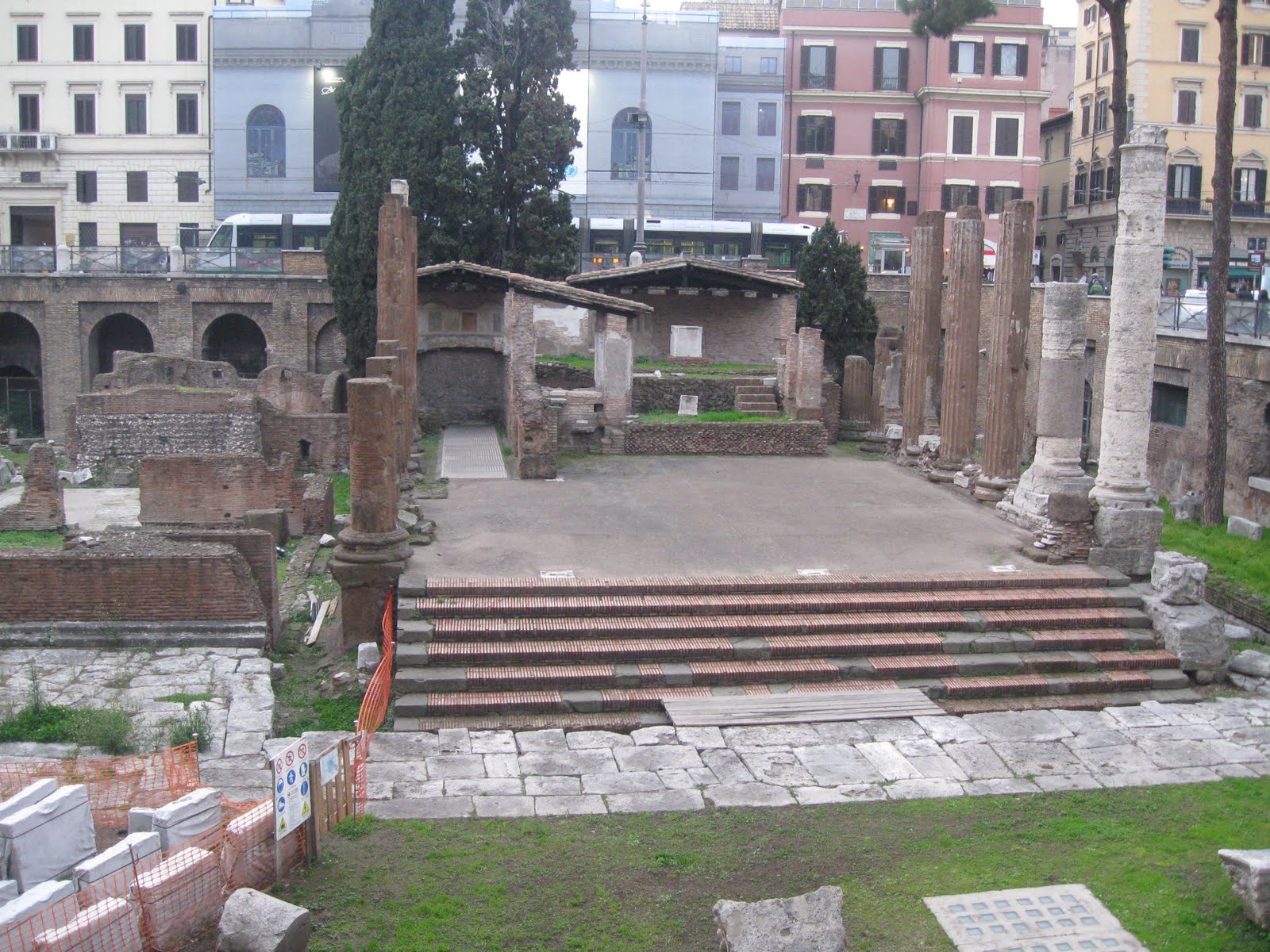
These questions have been the source of great controversy in the city of Rome. Building programs are hopeless in Rome. As soon as the ground is broken, you've entered into history. As soon as you enter into history, the painfully slow process of archaeology takes over. Slowly, they uncover priceless pieces of history. Maybe they discover an ancient crypt or temple. It could be over 5 years (if ever) before you get the chance to pour the concrete and start building. Take for example the excavation site of Largo Argentina which continues its excavations by tunneling underneath the surrounding roadways.

The reason that Rome is still packed full of buildings is because people were never really concerned about preserving history until the nineteenth century. After which, it became easier to simply refurbish your buildings than to take the risk of an archaeological take over by building new ones. The result is a beautiful old city whose apartments and shops have centuries of history in their walls.
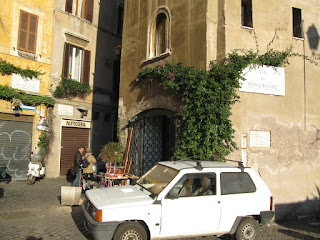
Before this new-found archaeological interest in history, and especially in the middle ages, ancient ruins were great resources for construction material. The Colosseum has the odd, half-finished look to it today because families at the time were using the marble, brick and stone for their own villas and churches.
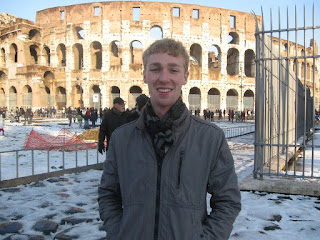
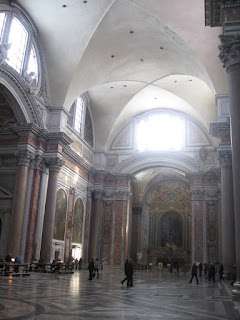
The Catholic Church was the first institution to begin preserving history by reclaiming old monuments as monuments for themselves. We can thank them for the great preservation of ancient buildings such as the Pantheon, the Colosseum and even the imperial steam baths of Diocletian. Strangely, this breath-taking basilica, originally used for hygiene and fitness, had been transformed into a building for worship.
We can also be thankful for the rich families of art appreciators, like the Machiavelli in Florence, who gathered art to show off in their own private collections (the first museums). Machiavelli's collections can still be seen in Florence today (read more about my Florence trip soon!).
An interesting example of the modern interest in the preservation of ancient history occurs in World War II when a bomb and shrapnel proof steel box was built around the Ara Pacis Augustae, a monument built to represent the peace that Augustus brought to Rome in 9 B.C..
Today, the focus is on Greece. As the economy struggles, their priorities are forced to change. The preservation of the past must give way to the promise of a decent future. Although unlikely, we can hope that a more capable power will recognize the significance of ancient art, and, maybe, they will be able to help protect it. After all, ancient Greek art has been regarded by geniuses like Leonardo and Michelangelo as some of the best artwork the world has ever seen.

The take-away should be this: there must be a compromise between preservation and pursuit. Greece has recognized this most recently, but this will also have to be recognized sooner or later by every other modern civilization.
When a country is at war or stuck in a political or economical crisis, not only are they defining for themselves a new course of history, but they may also be jeopardizing an old one. This raises some very important questions about archaeology and history in general. Essentially, why keep all this really old stuff? When should we destroy this old stuff to make way for new stuff? How much effort should we put into preserving the old stuff?
These questions have been the source of great controversy in the city of Rome. Building programs are hopeless in Rome. As soon as the ground is broken, you've entered into history. As soon as you enter into history, the painfully slow process of archaeology takes over. Slowly, they uncover priceless pieces of history. Maybe they discover an ancient crypt or temple. It could be over 5 years (if ever) before you get the chance to pour the concrete and start building. Take for example the excavation site of Largo Argentina which continues its excavations by tunneling underneath the surrounding roadways.
The reason that Rome is still packed full of buildings is because people were never really concerned about preserving history until the nineteenth century. After which, it became easier to simply refurbish your buildings than to take the risk of an archaeological take over by building new ones. The result is a beautiful old city whose apartments and shops have centuries of history in their walls.

Before this new-found archaeological interest in history, and especially in the middle ages, ancient ruins were great resources for construction material. The Colosseum has the odd, half-finished look to it today because families at the time were using the marble, brick and stone for their own villas and churches.

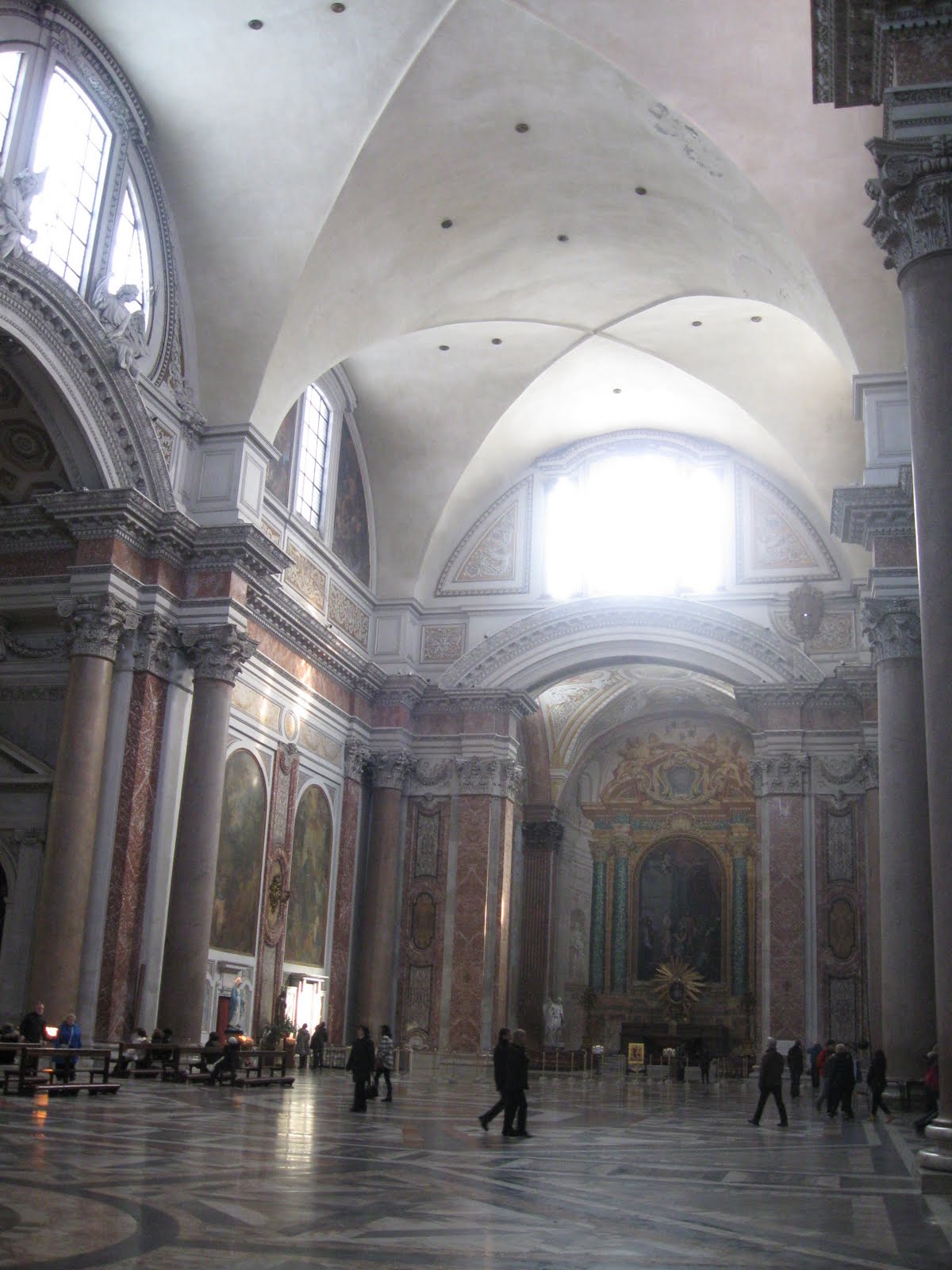
The Catholic Church was the first institution to begin preserving history by reclaiming old monuments as monuments for themselves. We can thank them for the great preservation of ancient buildings such as the Pantheon, the Colosseum and even the imperial steam baths of Diocletian. Strangely, this breath-taking basilica, originally used for hygiene and fitness, had been transformed into a building for worship.
We can also be thankful for the rich families of art appreciators, like the Machiavelli in Florence, who gathered art to show off in their own private collections (the first museums). Machiavelli's collections can still be seen in Florence today (read more about my Florence trip soon!).
An interesting example of the modern interest in the preservation of ancient history occurs in World War II when a bomb and shrapnel proof steel box was built around the Ara Pacis Augustae, a monument built to represent the peace that Augustus brought to Rome in 9 B.C..
Today, the focus is on Greece. As the economy struggles, their priorities are forced to change. The preservation of the past must give way to the promise of a decent future. Although unlikely, we can hope that a more capable power will recognize the significance of ancient art, and, maybe, they will be able to help protect it. After all, ancient Greek art has been regarded by geniuses like Leonardo and Michelangelo as some of the best artwork the world has ever seen.
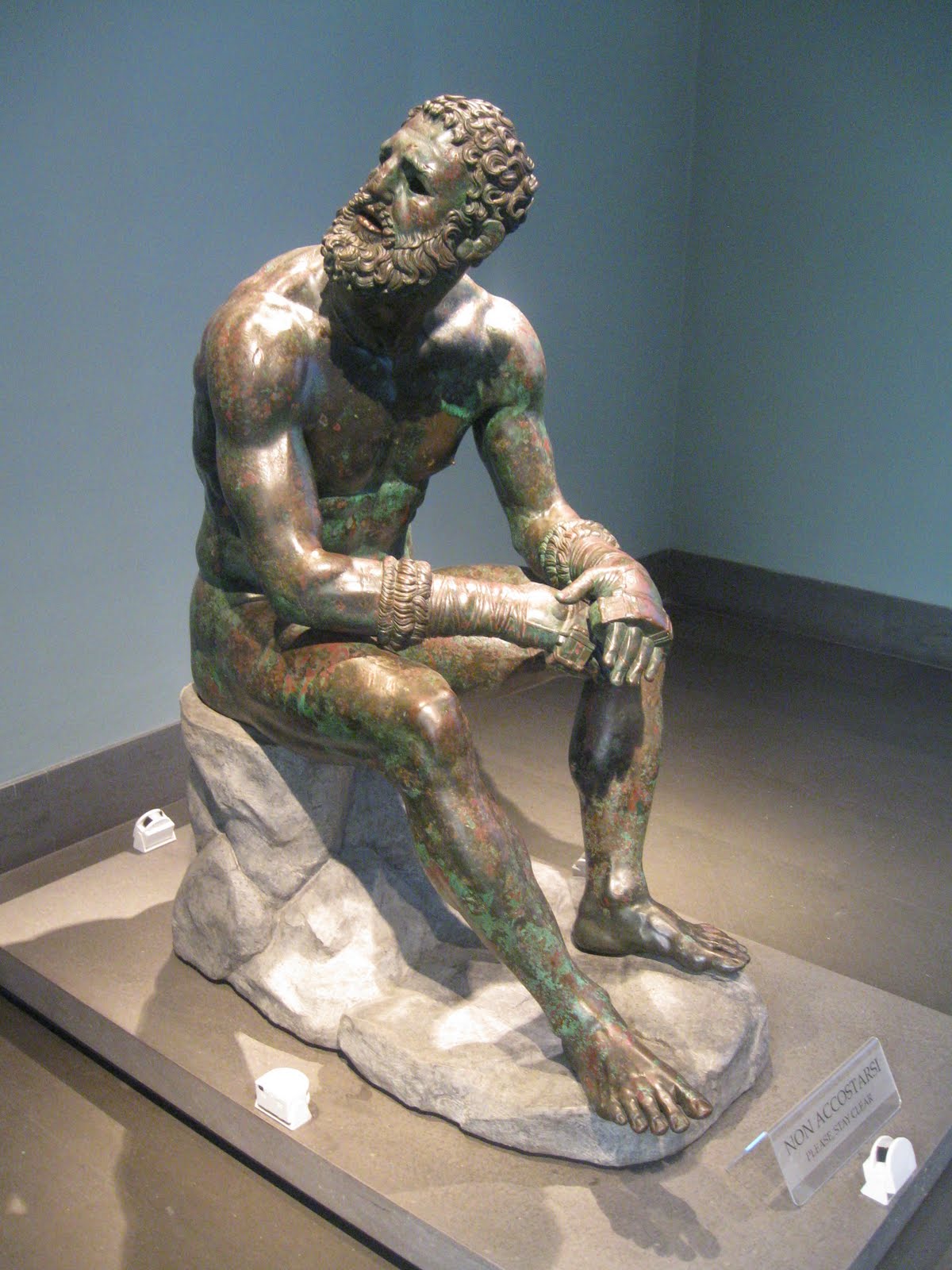
(Greek original bronze statue of a seated boxer, currently in Rome)
The take-away should be this: there must be a compromise between preservation and pursuit. Greece has recognized this most recently, but this will also have to be recognized sooner or later by every other modern civilization.
Thursday, February 16, 2012
Snowpocalypse Aftermath
As we all know by now, last week was a complete natural disaster for Rome. I won't be the first to correctly label it a 'snowpocalypse' and I certainly won't be the last. It was the heaviest snowfall since 1986, with accumulations of up to 20cm! That's almost 8 whole inches!! Imagine... 8 inches of snow... whatever would we do?




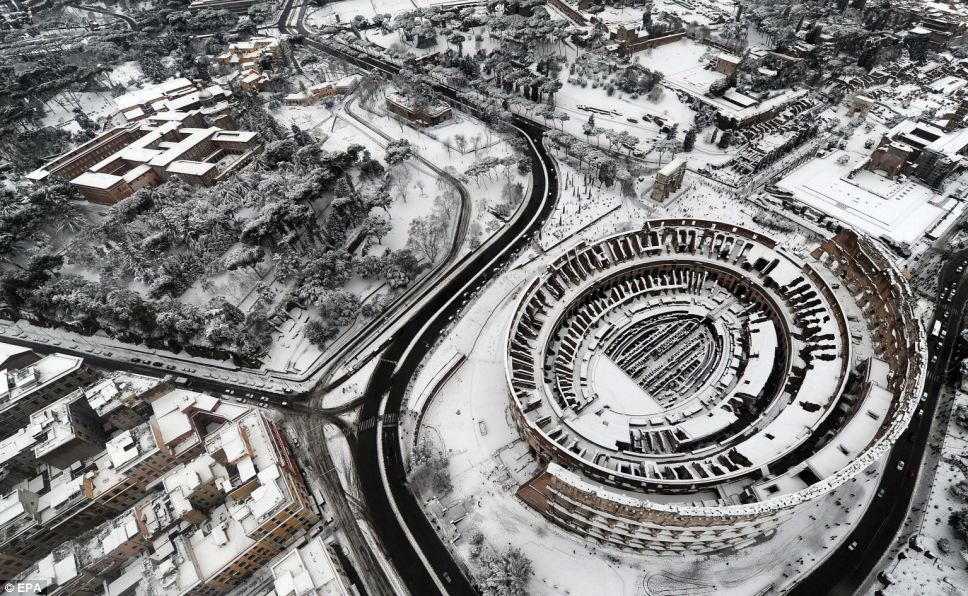
(Credit: www.dailymail.co.uk)
It was pretty cool at first, but things got annoying fast. All of my museums were closed, my monuments were closed, it was cold, wet, slushy, windy, cloudy. Let's just say I didn't pack the right materials and Rome wasn't handling things very well. Snow removal consists of 3 guys smoking cigarettes with spade shovels and a truck full of dirt.

Things were so bad (please, sense my sarcasm) that our school had to cancel classes last Monday. Apparently, there was ice on the ground or something. Our school president had this to say about the snowpocalypse, "True chaos was seen on Friday, and yesterday and today Rome has pratically come
to a halt."
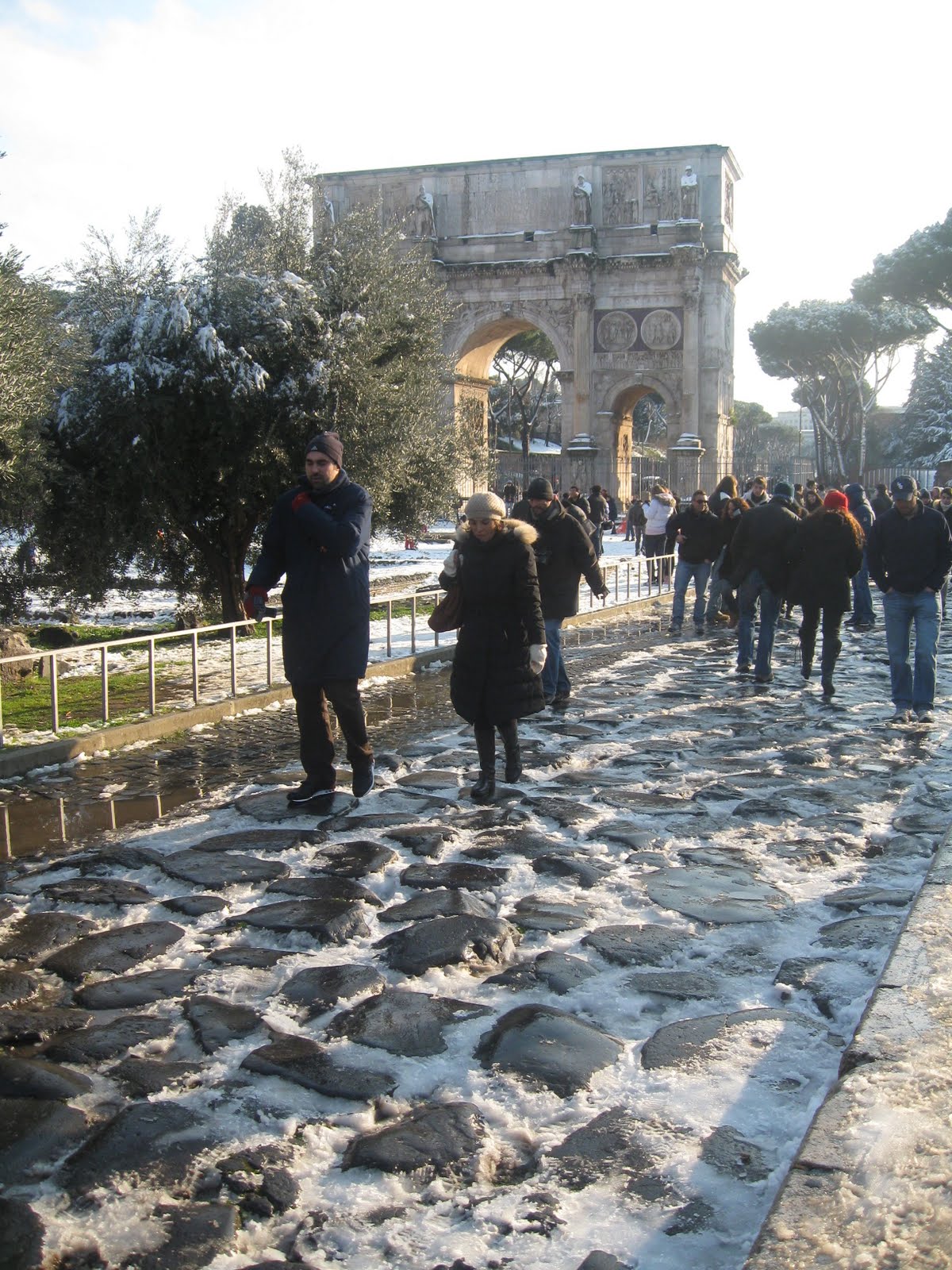
As if it weren't bad enough already, it snowed again last weekend! There was little I could do this time but join in hibernation with my roommates Anthony and Adam. Rome had closed museums just in anticipation of the snow. That had me frustrated. Joe, on the other hand, was courageous enough to leave the comforts of home and venture to Naples and Sorrento. Although very cold and rainy, Joe says he had a good time.
Adam and I toyed with the idea going to Viterbo last weekend, a nearby medieval town with natural hot springs in the surrounding country side. Unfortunately, the town had shut down completely and there was no longer any practical way to get to the hot springs. Ultimately, I spent the weekend couped up on the couch with a hot bowl of chili watching the snow fall. The snowpocalypse-round-two gave me enough time to read Brave New World. One of the greatest books I've ever read.
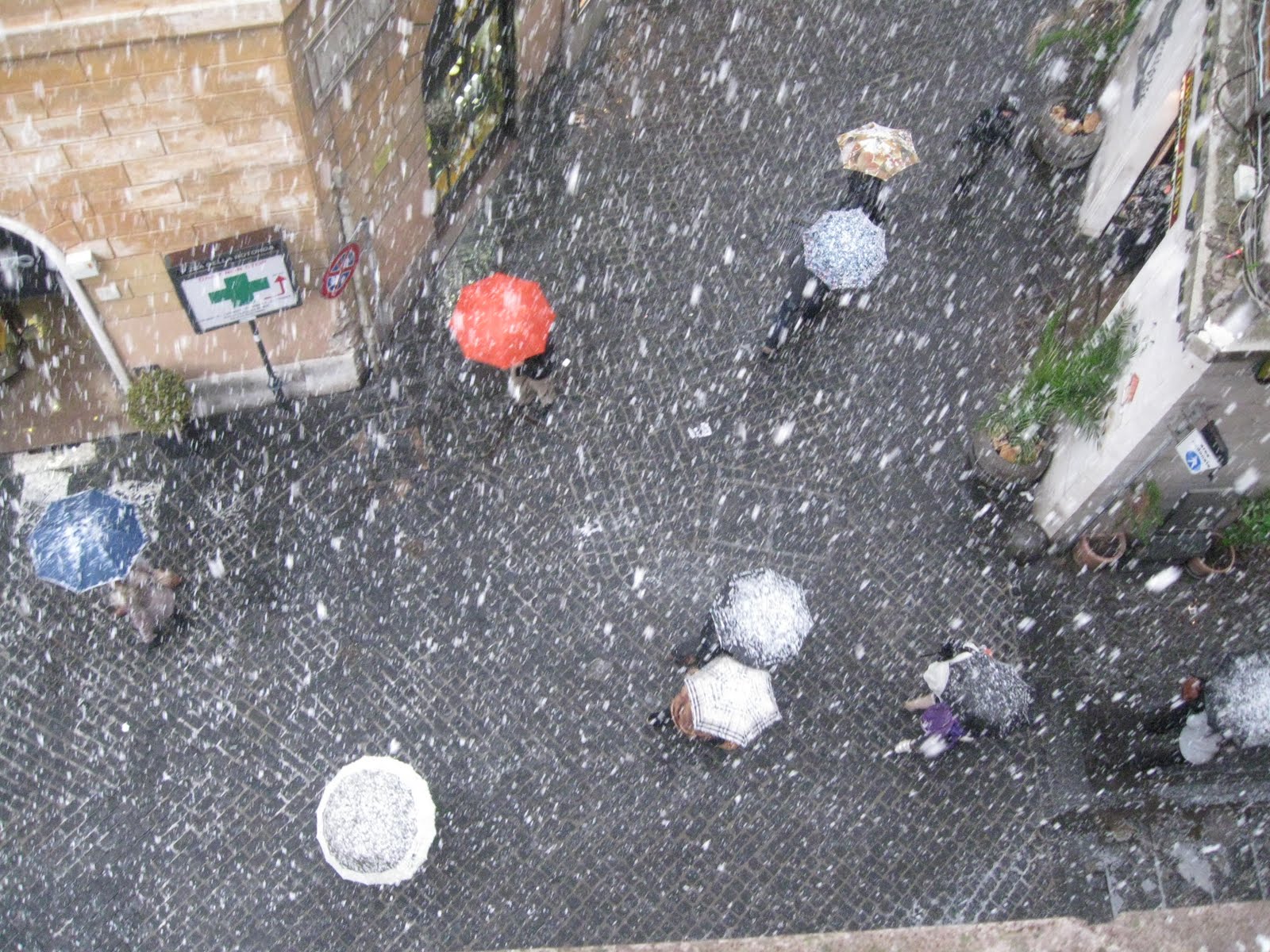
Although Italians hadn't managed the snow-fall very well, they sure had enjoyed themselves. They took to the streets, blocking traffic, and were visiting all of their own monuments now covered in snow. It was the first time in a while that the area around the Colosseum and the Pantheon was inhabited by more Romans than tourists. It was pleasant to see and it felt good to be enjoying the same thing as the locals. In some way, the snow temporarily bridged a gap between Romans and Americans, normally filled by a general, unfortunately entitled, distaste for tourists.

If you would like an Italian, 21st century look at the snowpocalypse, visit this facebook page: http://www.facebook.com/#!/Nevearoma?sk=wall&filter=2.
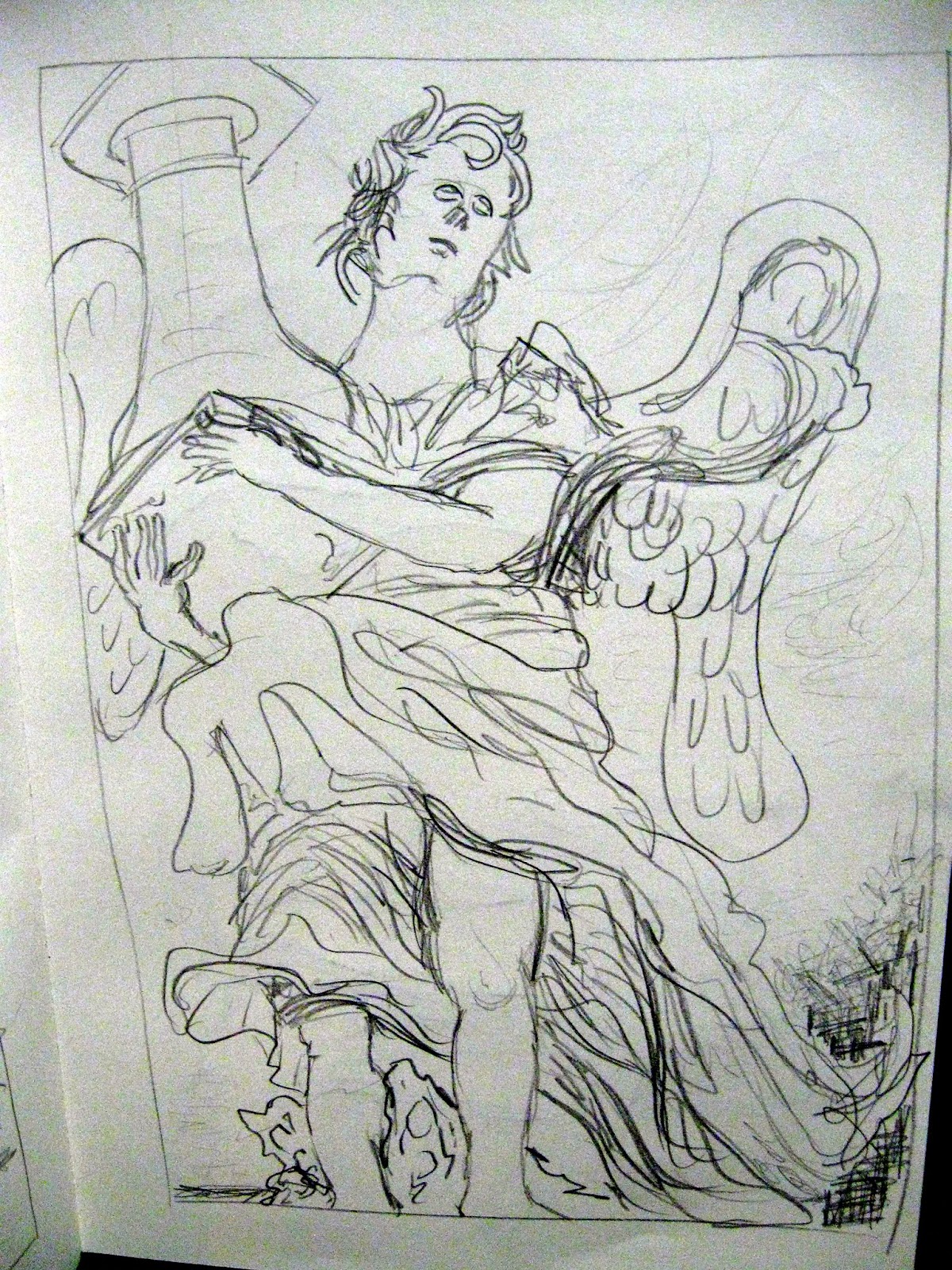
Alas, this week brought good news. The weather has been beautiful! The sun has been shining and I have been able to get back to what I love: wandering the streets of Rome, going to museums, and drawing statues. Our art class met outside Castello Di Sant Angelo and our task was to draw the 10 baroque angel statues designed by Bernini on the adjacent bridge. We were just happy to be in the sun again. Here are two of my favorites.

I haven't blogged in a while. In all honesty, there has been very little to write about. Unfortunately, the snow really did bring things to a halt here. There are a couple of events I would like to highlight when I get the chance. So, stay tuned!
Saturday, February 4, 2012
Friday, February 3, 2012
Wherever I Go, Wisconsin Follows!
When I was packing for Rome, the last thing I had planned for was snow. Lo' and behold, on Friday, February third, 4 inches of snow blanket the streets of Rome.

It was raining persistently for the last two or three days. It was cold too. People were saying that it would snow this weekend, but all of the local professors said that was unlikely.
My day started in the rain. I headed to campus this morning to take my first Italian exam. It went pretty well. As I finished, I started down the staircase and glanced out the window. There, I found my friend "Red Bull" Nick (he's always drinking a red bull when I see him and he never stops smiling). We just stood and stared. It was beautiful. Like I was seeing snow for the first time!
We could see the kids in the Jewish school across the way looking enthusiastically out the window as well. They looked so happy!
I went to my favorite pizza shop and got something to eat. The shopkeepers were hanging out the door with me and talking joyfully. He looked at me and said something in Italian about snow being beautiful, I think.
I ran back to my apartment as quickly as possible to grab my camera. Kids were playing in the streets. Adults were standing outside their shops, smiling, looking dumbfound.
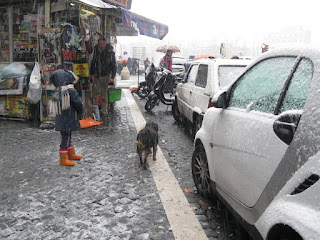
As I looked down the street, I could see people sticking their hands out of windows and doors. It was like the whole town was mystified by it.
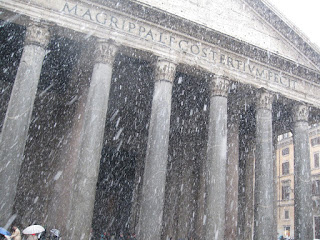
I got my camera and went into the Pantheon. Watching the snow fall gently through the oculus and into the center of the rotunda was one of the most beautiful things I have ever seen. It felt as though the building I were in had complete control over nature. It beautified what was already beautiful.

I walked back to campus and took pictures (snow towards the end) along the way. It wasn't until an hour later that I realized I couldn't feel my feet, hands, nose, or ears. I was cold. I went home and changed. A new change of clothes inspired me to actually make it to my next class, the Roman Sketchbook.
We were meeting at a museum, I guess. Only five people made it. He said it wasn't worth it and that he would buy us all cappuccinos for making it to class. After the coffee, my friend Daniel and I went to the museum to draw anyway.
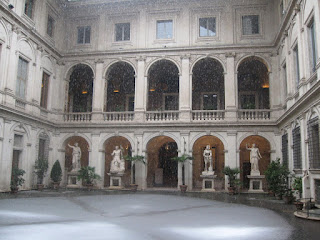
One statue was really spectacular, so we decided to draw it. At least, try.

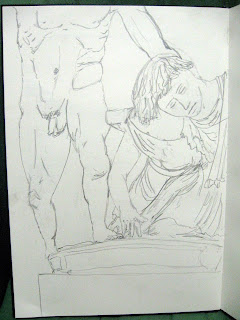
I didn't do all that well. Unfortunately, before I could try again, the museum director came around and told us that we had to leave since they were closing early. Employees were worried about getting home. She felt bad so she gave me her cell phone number and said I could call her this weekend and get another entry ticket for free. It wasn't until I got home that I realized, "Holly shit! I have the cell phone number for a director of an Italian national museum!" That's pretty cool.
We went back through Piazza Navona on our way to the Pantheon. It was all so beautiful. At this point, it was also pretty funny. Romans have no clue what to do about snow. They all have umbrellas for some reason. Some are pushing the snow off their doorsteps with brooms. Everyone stops driving. This town is completely unprepared for snow.

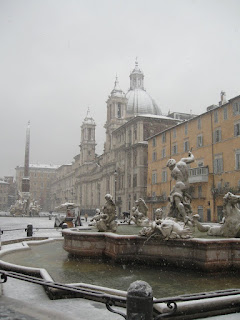
The Roman government issued a state of alert and closed all schools, museums, and public attractions for the rest of the day and possibly extending into tomorrow. Our school cancelled classes after 14:30.

A snow day in Rome. I never would have guessed it.

It was raining persistently for the last two or three days. It was cold too. People were saying that it would snow this weekend, but all of the local professors said that was unlikely.
My day started in the rain. I headed to campus this morning to take my first Italian exam. It went pretty well. As I finished, I started down the staircase and glanced out the window. There, I found my friend "Red Bull" Nick (he's always drinking a red bull when I see him and he never stops smiling). We just stood and stared. It was beautiful. Like I was seeing snow for the first time!
We could see the kids in the Jewish school across the way looking enthusiastically out the window as well. They looked so happy!
I went to my favorite pizza shop and got something to eat. The shopkeepers were hanging out the door with me and talking joyfully. He looked at me and said something in Italian about snow being beautiful, I think.
I ran back to my apartment as quickly as possible to grab my camera. Kids were playing in the streets. Adults were standing outside their shops, smiling, looking dumbfound.

As I looked down the street, I could see people sticking their hands out of windows and doors. It was like the whole town was mystified by it.
I got my camera and went into the Pantheon. Watching the snow fall gently through the oculus and into the center of the rotunda was one of the most beautiful things I have ever seen. It felt as though the building I were in had complete control over nature. It beautified what was already beautiful.
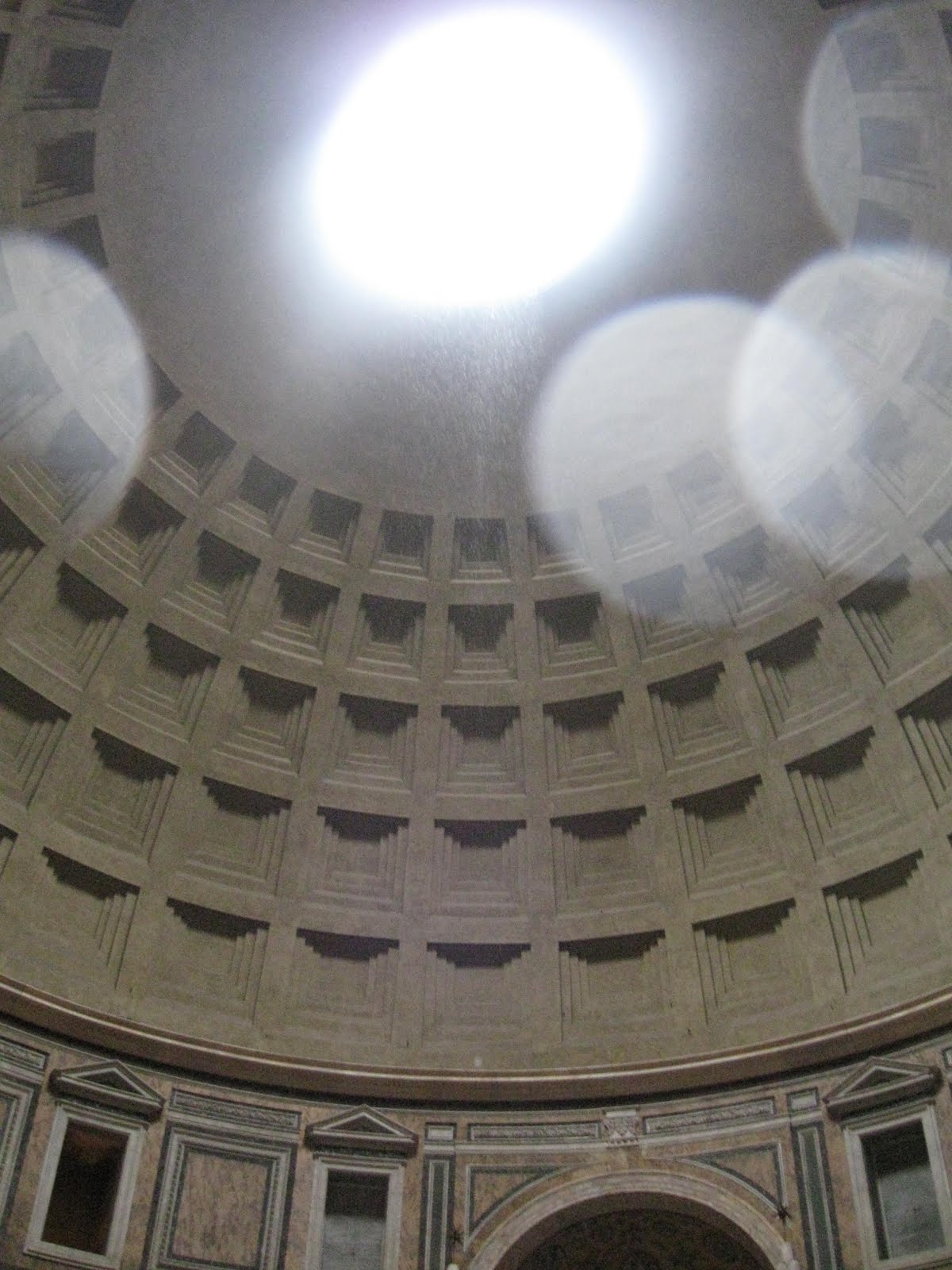
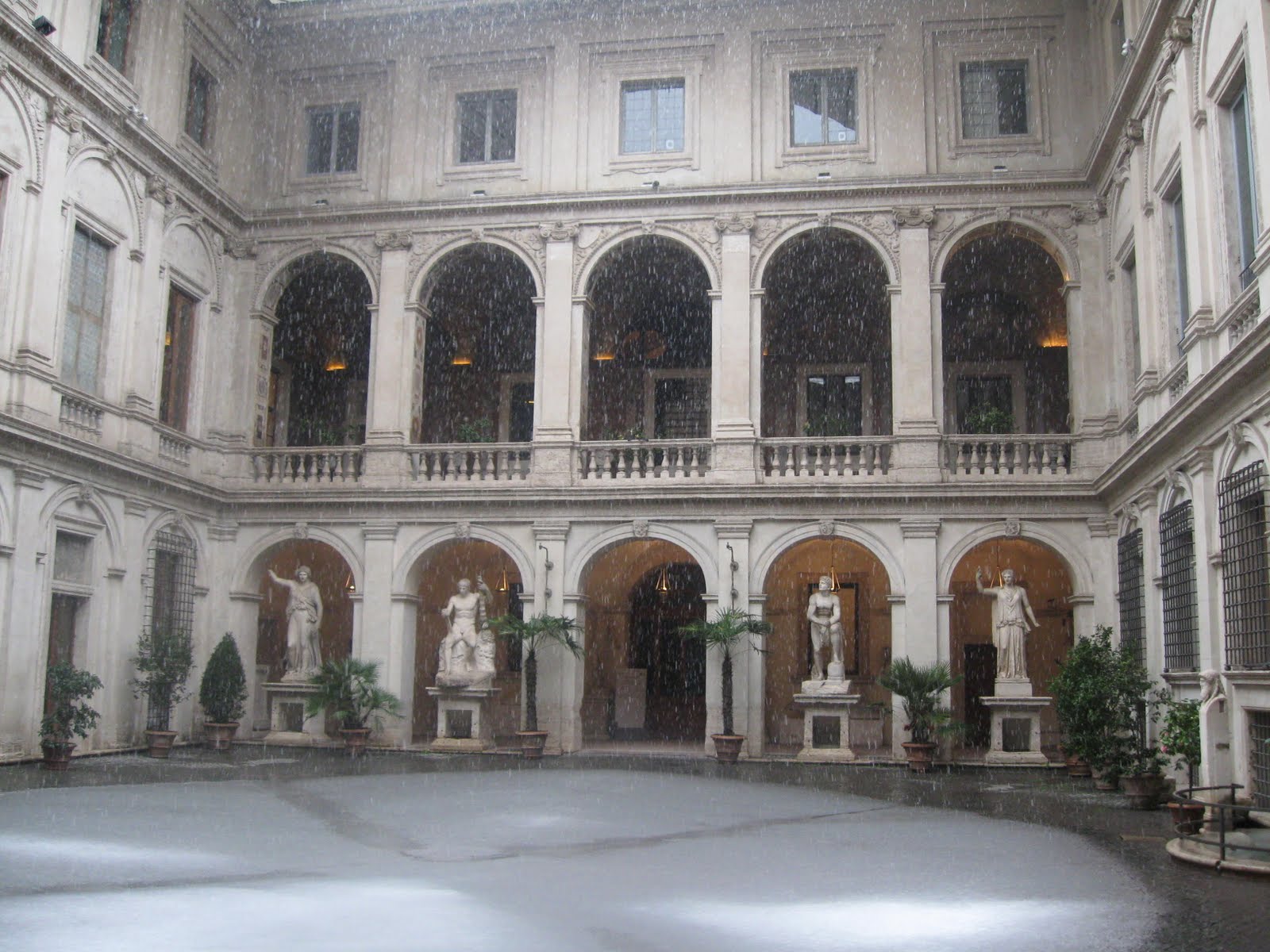
I walked back to campus and took pictures (snow towards the end) along the way. It wasn't until an hour later that I realized I couldn't feel my feet, hands, nose, or ears. I was cold. I went home and changed. A new change of clothes inspired me to actually make it to my next class, the Roman Sketchbook.

We were meeting at a museum, I guess. Only five people made it. He said it wasn't worth it and that he would buy us all cappuccinos for making it to class. After the coffee, my friend Daniel and I went to the museum to draw anyway.
One statue was really spectacular, so we decided to draw it. At least, try.
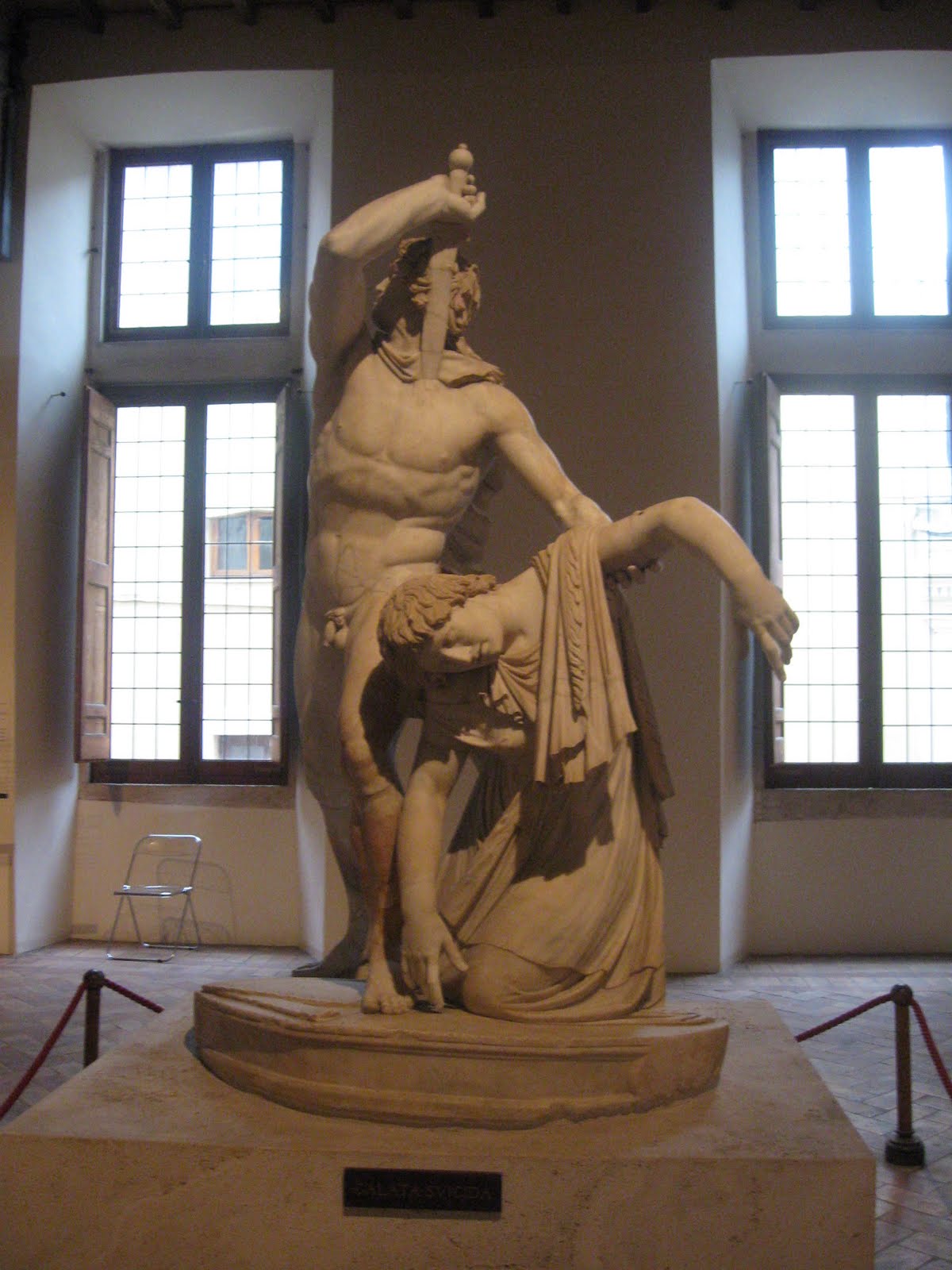

I didn't do all that well. Unfortunately, before I could try again, the museum director came around and told us that we had to leave since they were closing early. Employees were worried about getting home. She felt bad so she gave me her cell phone number and said I could call her this weekend and get another entry ticket for free. It wasn't until I got home that I realized, "Holly shit! I have the cell phone number for a director of an Italian national museum!" That's pretty cool.
We went back through Piazza Navona on our way to the Pantheon. It was all so beautiful. At this point, it was also pretty funny. Romans have no clue what to do about snow. They all have umbrellas for some reason. Some are pushing the snow off their doorsteps with brooms. Everyone stops driving. This town is completely unprepared for snow.
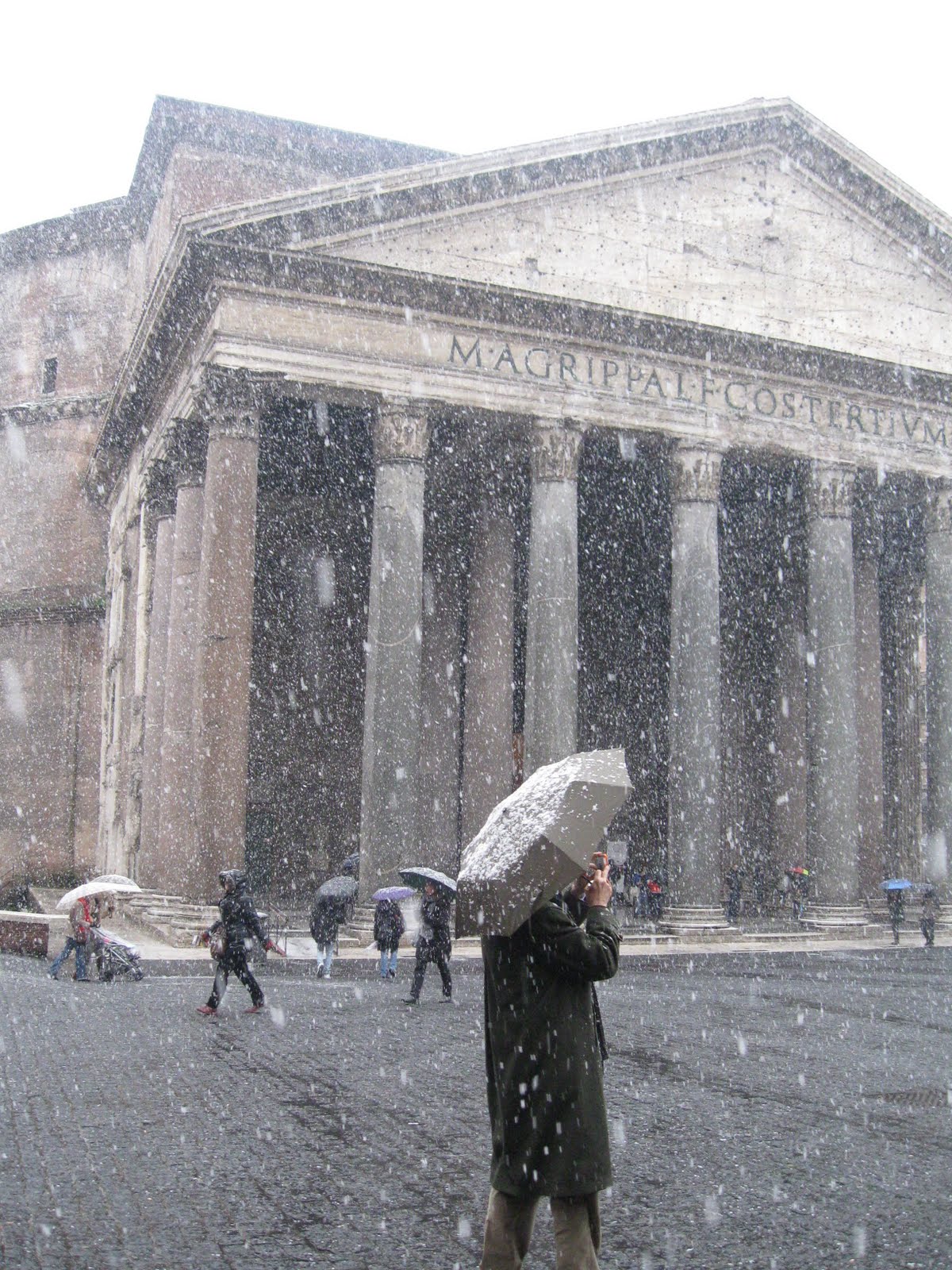
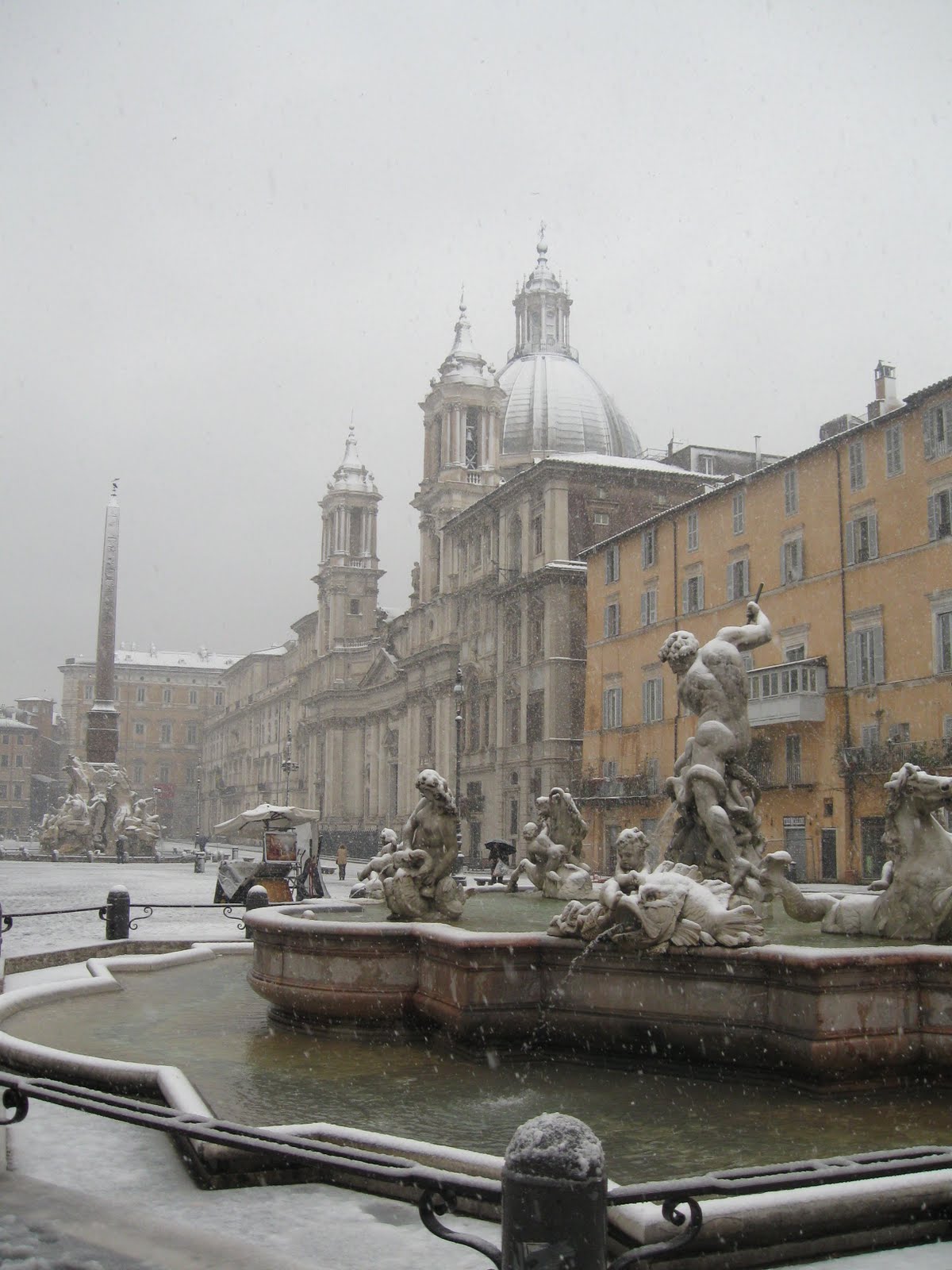
The Roman government issued a state of alert and closed all schools, museums, and public attractions for the rest of the day and possibly extending into tomorrow. Our school cancelled classes after 14:30.
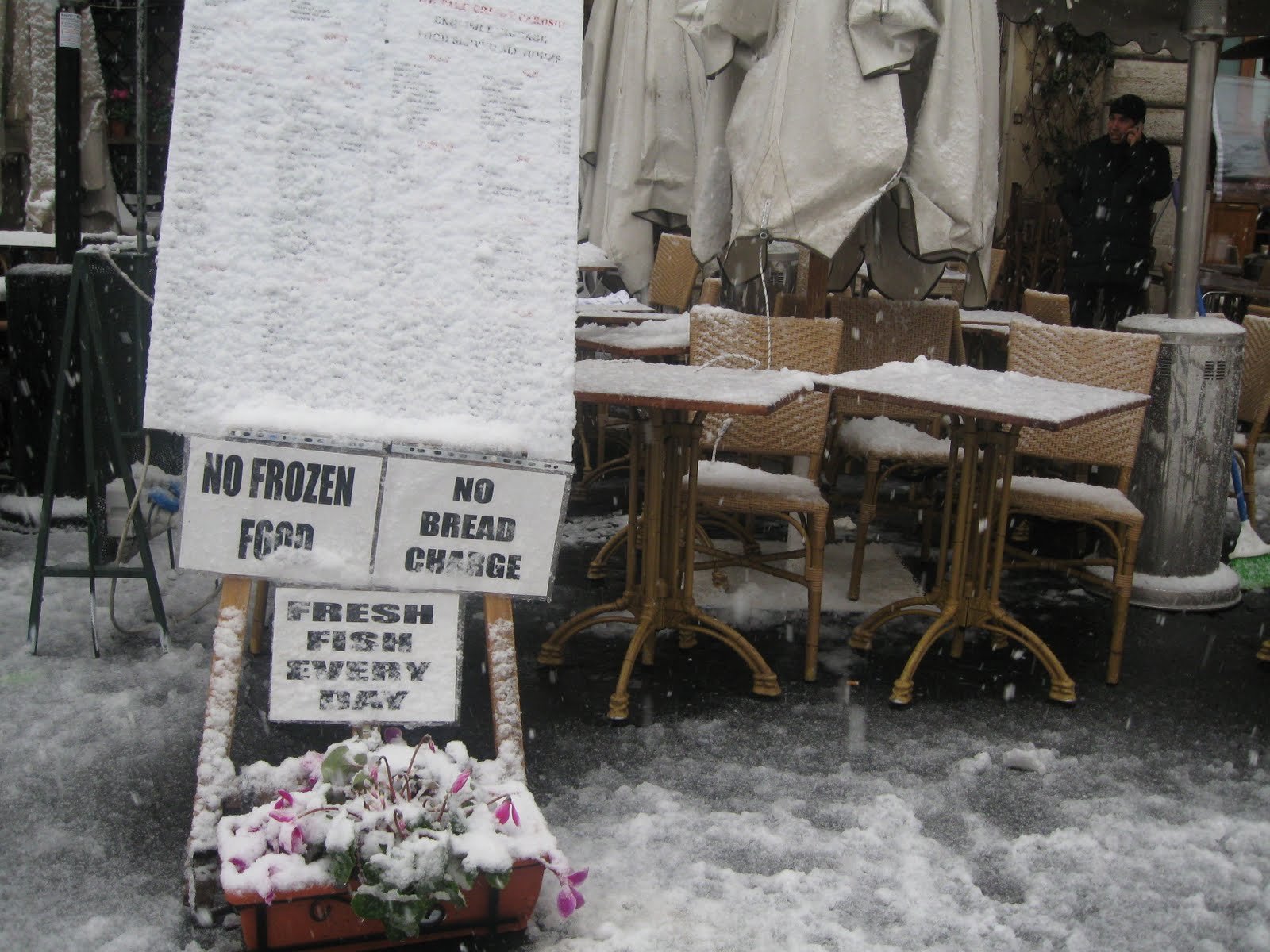
A snow day in Rome. I never would have guessed it.
Wednesday, February 1, 2012
My Mondays are Inspirational
The one thing I truly enjoy about universities is the easy access they provide to knowledge, opinions, and inspiration. It is difficult for me to see people who don't fully appreciate and exasperate this privilege.
I imagine that I am among the guilty party in some ways as well. But, being in Rome has opened my mind more than enough to see that this privilege should not be taken for granted.
Ironically, through my recent enjoyment of this privilege, I have come to recognize its true importance.
The last two Monday evenings, a John Cabot professor has hosted a few distinguished speakers on a variety of topics.
I would not have known about these if it weren't for Michalene Morelli, who's invite fortunately got to me via Facebook 2 hours before the first event. I must admit, the real draw at that time was the free reception... (vino rosso? Sì)
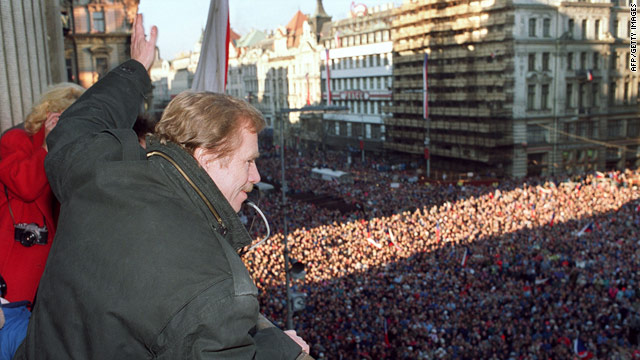
That first evening we were fortunate enough to hear from the Czech ambassador to Italy. He was speaking in remembrance of the Czech playwright, philosopher, and dissident, Václav Havel, and the Velvet Revolution.

Who? What? ...My questions exactly, but quickly answered with a screening of the most inspiring documentary I have ever seen: The Power of the Powerless. Go watch it now!
I knew that Czechoslovakia was under communist regime in the cold war, but I had no idea that it had lasted into 1989. I also had no idea about the collective efforts of students (younger than me), playwrights and poets which ultimately led to a march of a half million people and a revolution.
You learn so much and appreciate so much more in your life.
Under the communist regime, students' access to knowledge, opinions, and inspirations was harshly controlled by the propaganda machine. In my opinion, their efforts to combat this injustice were the most impressive in the revolution. They were the ones who organized the strikes and ultimately inspired the older generations to do something. They were the ones who were brutally attacked by the riot police during their peaceful protests.
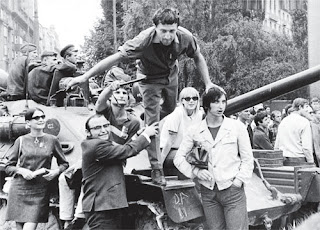
Václav Havel rode the revolutionary rift caused by these students. He later led the movement to success and was elected as the first president of the new Czech Republic. Most interestingly, he did not pursue justice of those police who brutally attacked the peaceful protesters. It makes you contemplate what it means to be justly punished and to be given a second chance. (For a Hollywood take on this, you should watch Inglorious Bastards.)
Moreover, Havel was a writer. During the communist regime, he wrote about all topics, in all genres, all the time while under the constant threat of imprisonment, interrogation and invasion of privacy. Unfortunately, many of those threats were successfully carried out against him.
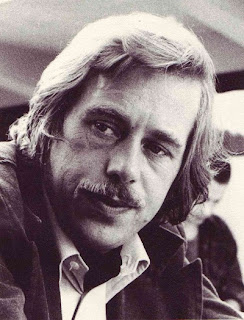
His works are only recently being published in other languages and we had met some of the translators at the event. I read one paragraph by him online and he radically changed my view about the workings of dictatorships. Much less simple than anyone has ever described it to me.
But, I digress. I am happy to have discovered an author who can really open my mind.
The motivation for holding this event was the recent passing of Václav Havel. He died the same day as Kim Jong Il. That really makes you wonder.
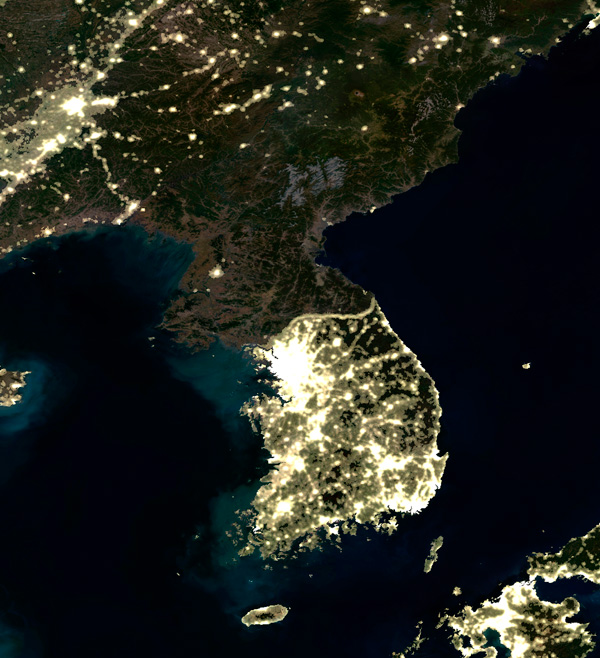
Speaking of Kim Jong Il, the event last Monday featured an anthropologist speaking about the people of Korea, their immigration patterns, and their opinions towards cultural differences between the North and South. It was followed by a short debate about how to deal with North Korea politically. Let's just say that anyone who thinks that, with the death of Kim Jong Il, North Korea is 'on the brink' of a revolution should probably read some Havel. Dictatorships survive through the extensive, powerful networks of class oppression, propaganda, and secret police, not the dictators, who themselves are essentially puppets.

Again, I digress.
The point is this. Since getting to Rome, my mind has opened up completely. I have learned more in the past month than I ever could have imagined. I am finally meeting people outside the mid-west and outside my country. I look for inspiration in everything I see and I can usually find it. I have a new desire to learn about things I had never previously thought about or cared about. This is turning out to be an amazing educational experience and I am overly grateful that I have been given this opportunity. I will continue to make the best of every Euro I spend out of my and my parents' pocket, because I realize that I am fortunate enough to have a pocket to dig out of.
Why did I have to be in Rome for this all to happen? What does Rome have that Wisconsin doesn't? Is it the cobblestone streets? Is it the 2000 year old buildings? Is it the wine? ...Must be the wine.
I imagine that I am among the guilty party in some ways as well. But, being in Rome has opened my mind more than enough to see that this privilege should not be taken for granted.
Ironically, through my recent enjoyment of this privilege, I have come to recognize its true importance.
The last two Monday evenings, a John Cabot professor has hosted a few distinguished speakers on a variety of topics.
I would not have known about these if it weren't for Michalene Morelli, who's invite fortunately got to me via Facebook 2 hours before the first event. I must admit, the real draw at that time was the free reception... (vino rosso? Sì)
That first evening we were fortunate enough to hear from the Czech ambassador to Italy. He was speaking in remembrance of the Czech playwright, philosopher, and dissident, Václav Havel, and the Velvet Revolution.
(Credit: http://i.cdn.turner.com/cnn/2009/WORLD/europe/11/16/velvet.revolution.etzler/t1larg.czech.jpg)
Who? What? ...My questions exactly, but quickly answered with a screening of the most inspiring documentary I have ever seen: The Power of the Powerless. Go watch it now!
I knew that Czechoslovakia was under communist regime in the cold war, but I had no idea that it had lasted into 1989. I also had no idea about the collective efforts of students (younger than me), playwrights and poets which ultimately led to a march of a half million people and a revolution.
You learn so much and appreciate so much more in your life.
Under the communist regime, students' access to knowledge, opinions, and inspirations was harshly controlled by the propaganda machine. In my opinion, their efforts to combat this injustice were the most impressive in the revolution. They were the ones who organized the strikes and ultimately inspired the older generations to do something. They were the ones who were brutally attacked by the riot police during their peaceful protests.

(Credit: http://www.spaziotadini.it/images/Hajek02.jpg)
Václav Havel rode the revolutionary rift caused by these students. He later led the movement to success and was elected as the first president of the new Czech Republic. Most interestingly, he did not pursue justice of those police who brutally attacked the peaceful protesters. It makes you contemplate what it means to be justly punished and to be given a second chance. (For a Hollywood take on this, you should watch Inglorious Bastards.)
Moreover, Havel was a writer. During the communist regime, he wrote about all topics, in all genres, all the time while under the constant threat of imprisonment, interrogation and invasion of privacy. Unfortunately, many of those threats were successfully carried out against him.

(Credit: http://reason.com/assets/mc/ngillespie/2011_12/havel.jpg)
His works are only recently being published in other languages and we had met some of the translators at the event. I read one paragraph by him online and he radically changed my view about the workings of dictatorships. Much less simple than anyone has ever described it to me.
But, I digress. I am happy to have discovered an author who can really open my mind.
The motivation for holding this event was the recent passing of Václav Havel. He died the same day as Kim Jong Il. That really makes you wonder.
Speaking of Kim Jong Il, the event last Monday featured an anthropologist speaking about the people of Korea, their immigration patterns, and their opinions towards cultural differences between the North and South. It was followed by a short debate about how to deal with North Korea politically. Let's just say that anyone who thinks that, with the death of Kim Jong Il, North Korea is 'on the brink' of a revolution should probably read some Havel. Dictatorships survive through the extensive, powerful networks of class oppression, propaganda, and secret police, not the dictators, who themselves are essentially puppets.
(Credit: http://www.newscientist.com/blogs/shortsharpscience/2011/12/19/C0044096-Korea_at_night,_satellite_image-SPL.jpg)
Again, I digress.
The point is this. Since getting to Rome, my mind has opened up completely. I have learned more in the past month than I ever could have imagined. I am finally meeting people outside the mid-west and outside my country. I look for inspiration in everything I see and I can usually find it. I have a new desire to learn about things I had never previously thought about or cared about. This is turning out to be an amazing educational experience and I am overly grateful that I have been given this opportunity. I will continue to make the best of every Euro I spend out of my and my parents' pocket, because I realize that I am fortunate enough to have a pocket to dig out of.
Why did I have to be in Rome for this all to happen? What does Rome have that Wisconsin doesn't? Is it the cobblestone streets? Is it the 2000 year old buildings? Is it the wine? ...Must be the wine.
Subscribe to:
Posts (Atom)